
In the bustling world of construction and mining, the efficiency and longevity of heavy equipment are paramount. The backbone of these industries lies in the reliability of their machinery, which is heavily dependent on the quality and availability of spare parts. This article delves into the critical spare parts for construction and mining vehicles, focusing on the GCC region, where rapid urbanization and industrial growth demand robust solutions.
Spare Parts for Construction and Mining Vehicles
Types of Spare Parts for Heavy Machinery
Heavy machinery in construction and mining requires a diverse range of spare parts to function optimally. These parts include hydraulic components, engine parts, and electrical systems, each playing a crucial role in the machinery’s operation. The availability of these parts ensures minimal downtime and maximizes productivity.
- Hydraulic Components: Essential for the movement and operation of machinery.
- Engine Parts: Critical for the power and efficiency of the equipment.
- Electrical Systems: Necessary for the control and automation of machinery functions.
Importance of Quality Replacement Components
Quality replacement components are vital for maintaining the performance and safety of heavy equipment. Using substandard parts can lead to frequent breakdowns and increased maintenance costs. High-quality parts ensure the machinery operates smoothly and safely, reducing the risk of accidents and prolonging the equipment’s lifespan.
- Enhanced Durability: Quality parts withstand harsh conditions better.
- Safety Assurance: Reduces the risk of equipment failure and accidents.
- Cost Efficiency: Lowers long-term maintenance and replacement costs.
Common Wear Parts in Construction and Mining Equipment
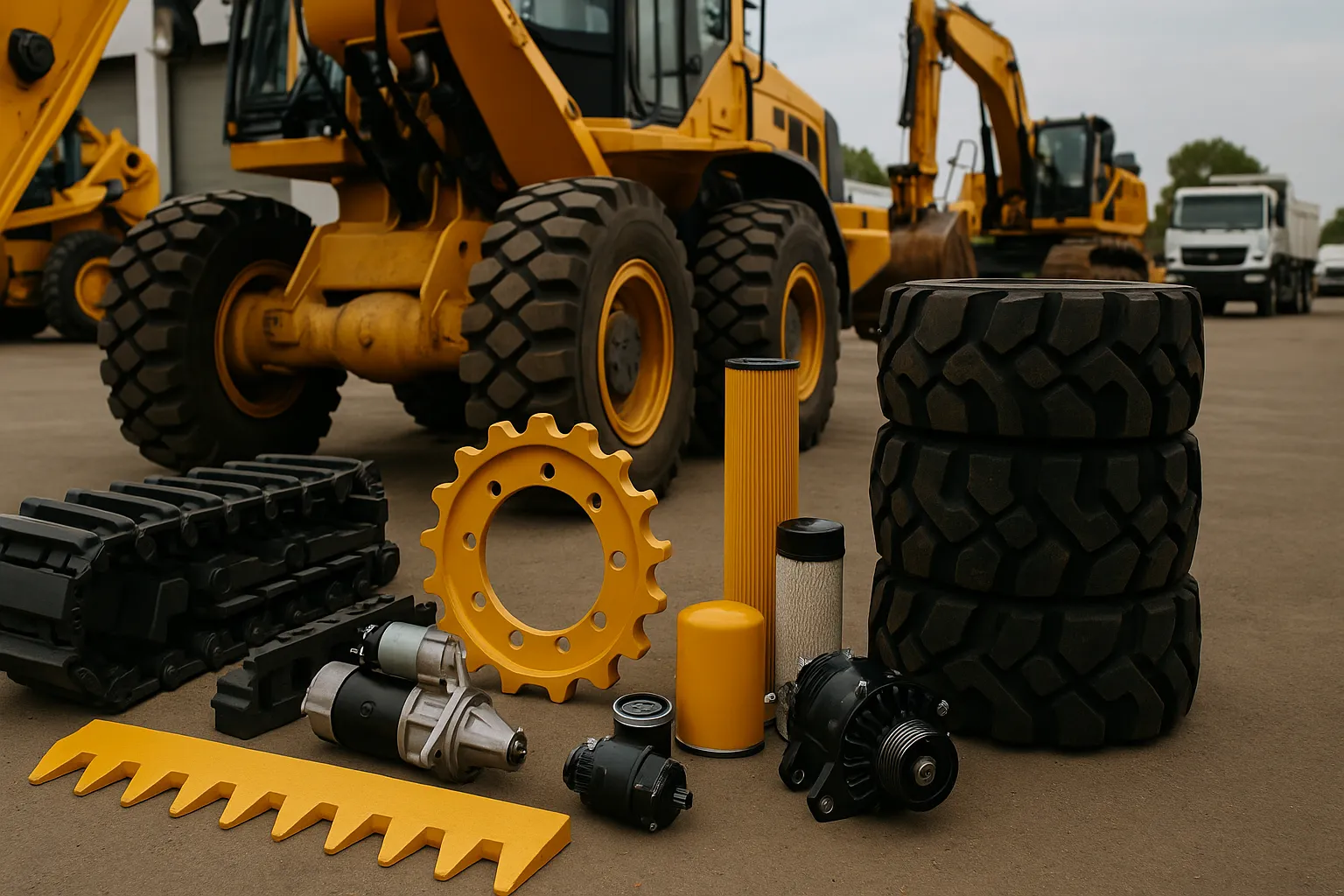
Wear parts are components that experience regular wear and tear due to their constant use. In construction and mining equipment, these include items like tires, tracks, and cutting edges. Regular inspection and timely replacement of these parts are crucial to prevent unexpected breakdowns.
- Tires and Tracks: Subject to constant friction and pressure.
- Cutting Edges: Wear down quickly due to contact with hard materials.
- Filters and Belts: Require frequent replacement to maintain efficiency.
Undercarriage Solutions for Heavy Equipment
Track Group Assemblies
Track group assemblies are integral to the mobility of tracked vehicles like excavators and bulldozers. These assemblies include tracks, chains, and shoes, which must be robust and durable to handle the demanding environments of construction and mining sites.
- Tracks: Provide stability and traction on uneven terrain.
- Chains: Connect the track links and ensure smooth movement.
- Shoes: Offer grip and protect the tracks from damage.
Rollers and Idlers
Rollers and idlers support the weight of the equipment and facilitate the smooth movement of tracks. They are crucial for maintaining the alignment and tension of the tracks, preventing derailment and excessive wear.
- Support Rollers: Bear the weight of the equipment.
- Guide Idlers: Maintain track alignment and tension.
- Durability: Made from high-strength materials to withstand heavy loads.
Sprockets and Wear Accessories
Sprockets drive the tracks and are subject to significant wear. High-quality sprockets and wear accessories are essential for the efficient operation of tracked vehicles, ensuring smooth and reliable movement.
- Drive Sprockets: Engage with the track links to propel the vehicle.
- Wear Accessories: Protect critical components from abrasion.
- Material Strength: Constructed from hardened steel for longevity.
Construction Equipment Spare Parts Market Analysis
Market Size and Growth Trends
The construction equipment spare parts market is experiencing significant growth, driven by increasing construction activities and infrastructure development. The global market is projected to reach $22.6 billion by 2026, with a CAGR of 3.8% from 2021 to 2026.
- Rising Demand: Fueled by urbanization and industrialization.
- Technological Advancements: Enhancing the efficiency of spare parts.
- Investment Opportunities: Attracting new players to the market.
Key Players in the Industry
Several key players dominate the construction equipment spare parts market, offering a wide range of products and services. These companies focus on innovation and quality to maintain their competitive edge.
- Caterpillar Inc.: A leading manufacturer of construction equipment and spare parts.
- Komatsu Ltd.: Known for its durable and reliable machinery components.
- Volvo Construction Equipment: Offers a comprehensive range of spare parts and services.
Regional Market Dynamics
The GCC region is witnessing rapid growth in the construction sector, driving the demand for spare parts. The region’s strategic location and robust infrastructure development make it a lucrative market for spare parts suppliers.
- Infrastructure Projects: Boosting demand for construction equipment.
- Strategic Location: Facilitates easy access to global markets.
- Government Initiatives: Supporting industrial growth and development.
Urbanization Impact on Spare Parts Demand
Urbanization is a significant driver of spare parts demand, as cities expand and new infrastructure projects emerge. The need for reliable and efficient machinery increases, leading to a higher demand for quality spare parts.
- City Expansion: Requires more construction equipment and parts.
- Infrastructure Development: Drives the need for durable components.
- Sustainability Focus: Encourages the use of eco-friendly spare parts.
Mining Equipment Replacement Components
Excavator Parts
Excavators are essential in mining operations, and their efficiency depends on the availability of quality spare parts. Key components include hydraulic pumps, engines, and undercarriage parts, which must be regularly maintained and replaced.
- Hydraulic Pumps: Power the movement of the excavator arm.
- Engines: Provide the necessary power for operation.
- Undercarriage Parts: Ensure stability and mobility on rough terrain.
Dozer Edges and Blades
Dozers are used for earthmoving and grading, and their blades and edges are subject to significant wear. High-quality replacement edges and blades are crucial for maintaining the dozer’s performance and efficiency.
- Cutting Edges: Wear down quickly and require frequent replacement.
- Blades: Must be durable to handle tough materials.
- Material Quality: Made from hardened steel for extended use.
Loader Buckets and Attachments
Loaders are versatile machines used in various mining operations. Their buckets and attachments must be robust and adaptable to different tasks, ensuring efficient material handling.
- Buckets: Designed for specific materials and tasks.
- Attachments: Enhance the loader’s versatility and efficiency.
- Durability: Constructed from high-strength materials for longevity.
Shovel and Dragline Components
Shovels and draglines are critical in large-scale mining operations, and their components must be reliable and durable. Regular maintenance and replacement of parts like ropes, buckets, and booms are essential for optimal performance.
- Ropes: Subject to tension and wear, requiring regular inspection.
- Buckets: Must be robust to handle large volumes of material.
- Booms: Provide the necessary reach and support for operations.
Technological Advancements in Spare Parts Manufacturing
Utilizing the Latest Technology in Production
The spare parts manufacturing industry is embracing the latest technologies to enhance production efficiency and product quality. Automation and advanced machinery are streamlining processes and reducing production times.
- Automation: Increases production speed and consistency.
- Advanced Machinery: Enhances precision and quality control.
- Innovation: Drives the development of new and improved spare parts.
Metallurgical Innovations for Improved Durability
Metallurgical advancements are leading to the development of more durable and resilient spare parts. New alloys and heat treatment processes are enhancing the strength and longevity of components.
- New Alloys: Offer superior strength and wear resistance.
- Heat Treatment: Improves the hardness and durability of metals.
- Corrosion Resistance: Extends the lifespan of parts in harsh environments.
3D Printing Applications in Spare Parts Manufacturing
3D printing is revolutionizing the spare parts industry by enabling rapid prototyping and production of complex components. This technology allows for greater customization and reduces lead times for spare parts.
- Rapid Prototyping: Speeds up the development of new parts.
- Customization: Allows for tailored solutions to specific needs.
- Cost Efficiency: Reduces material waste and production costs.
Maintenance and Replacement Strategies for Heavy Equipment
Preventive Maintenance Schedules
Implementing preventive maintenance schedules is crucial for the longevity and efficiency of heavy equipment. Regular inspections and servicing help identify potential issues before they lead to costly breakdowns.
- Regular Inspections: Detect wear and tear early.
- Scheduled Servicing: Ensures optimal performance and safety.
- Cost Savings: Reduces the risk of unexpected repairs and downtime.
Identifying Wear Patterns and Part Life Cycles
Understanding wear patterns and part life cycles is essential for effective maintenance. By analyzing these patterns, operators can predict when parts will need replacement, minimizing downtime and maximizing productivity.
- Wear Analysis: Identifies high-wear areas and components.
- Life Cycle Assessment: Predicts part replacement timelines.
- Efficiency Improvement: Optimizes maintenance schedules and resource allocation.
Cost-Effective Replacement Strategies
Developing cost-effective replacement strategies involves balancing quality and cost. By choosing the right parts and suppliers, operators can reduce expenses while maintaining equipment performance.
- Supplier Evaluation: Ensures quality and reliability of parts.
- Cost-Benefit Analysis: Balances initial costs with long-term savings.
- Inventory Management: Optimizes spare parts stock levels.
Sourcing Quality Spare Parts for Construction and Mining Vehicles
OEM vs. Aftermarket Parts
Choosing between OEM and aftermarket parts is a critical decision for equipment operators. OEM parts are designed specifically for the equipment, ensuring compatibility and performance, while aftermarket parts offer cost savings and a wider selection.
- OEM Parts: Guarantee compatibility and quality.
- Aftermarket Parts: Provide cost-effective alternatives.
- Decision Factors: Consider quality, cost, and availability.
Evaluating Supplier Reliability and Part Quality
Selecting reliable suppliers is essential for sourcing quality spare parts. Evaluating suppliers based on their reputation, product quality, and customer service ensures a steady supply of reliable components.
- Reputation: Indicates the supplier’s reliability and trustworthiness.
- Product Quality: Ensures the durability and performance of parts.
- Customer Service: Provides support and assistance when needed.
Global Supply Chain Considerations
The global supply chain plays a significant role in the availability and cost of spare parts. Understanding the dynamics of the supply chain helps operators make informed decisions about sourcing and inventory management.
- Supply Chain Dynamics: Affect availability and pricing of parts.
- Logistics Management: Ensures timely delivery and reduces lead times.
- Risk Mitigation: Addresses potential disruptions and delays.
Environmental Impact of Spare Parts Production and Disposal
Sustainable Manufacturing Practices
Adopting sustainable manufacturing practices is crucial for reducing the environmental impact of spare parts production. These practices include using eco-friendly materials and minimizing waste during production.
- Eco-Friendly Materials: Reduce the environmental footprint of parts.
- Waste Reduction: Minimizes production waste and resource consumption.
- Energy Efficiency: Lowers energy usage and emissions.
Recycling and Remanufacturing Initiatives
Recycling and remanufacturing initiatives help reduce waste and conserve resources. By refurbishing used parts, manufacturers can extend their lifespan and reduce the demand for new materials.
- Part Refurbishment: Extends the life of used components.
- Resource Conservation: Reduces the need for new materials.
- Waste Reduction: Minimizes landfill contributions.
Eco-Friendly Material Alternatives
Exploring eco-friendly material alternatives is essential for sustainable spare parts production. These materials offer similar performance to traditional options while reducing environmental impact.
- Biodegradable Materials: Break down naturally without harming the environment.
- Recycled Materials: Utilize waste products to create new parts.
- Sustainable Sourcing: Ensures materials are obtained responsibly.
Future Trends in Construction and Mining Vehicle Spare Parts
Predictive Maintenance and IoT Integration
Predictive maintenance and IoT integration are transforming the spare parts industry. By using sensors and data analytics, operators can predict equipment failures and schedule maintenance proactively.
- Sensor Technology: Monitors equipment condition in real-time.
- Data Analytics: Analyzes performance data to predict failures.
- Proactive Maintenance: Reduces downtime and extends equipment life.
Automation and Robotics in Parts Manufacturing
Automation and robotics are revolutionizing parts manufacturing, increasing efficiency and precision. These technologies reduce production times and improve the quality of spare parts.
- Robotic Automation: Enhances production speed and accuracy.
- Precision Manufacturing: Ensures high-quality and consistent parts.
- Labor Efficiency: Reduces the need for manual labor and errors.
Emerging Materials for Enhanced Performance
Emerging materials are offering new possibilities for spare parts performance. These materials provide superior strength, durability, and resistance to harsh conditions, enhancing the longevity and efficiency of components.
- Advanced Composites: Offer lightweight and strong alternatives.
- High-Performance Alloys: Provide exceptional durability and wear resistance.
- Nanomaterials: Enhance material properties at the molecular level.
In conclusion, the spare parts industry for construction and mining vehicles is evolving rapidly, driven by technological advancements and increasing demand. By understanding the critical components and trends, operators can ensure their equipment remains efficient and reliable, supporting the growth and success of their operations.
FAQs
What are the benefits of using OEM spare parts for construction and mining vehicles?
Using OEM spare parts for construction and mining vehicles ensures compatibility and quality. These parts are designed specifically for the equipment, providing optimal performance and reliability. Additionally, OEM parts often come with warranties and support from the manufacturer.
How often should spare parts be replaced in mining equipment?
Spare parts in mining equipment should be replaced based on their wear patterns and life cycles. Regular inspections and maintenance schedules help determine the optimal replacement intervals. This proactive approach minimizes downtime and ensures the equipment’s efficiency and safety.
What are the most common spare parts for construction vehicles?
The most common spare parts for construction vehicles include hydraulic components, engine parts, and electrical systems. These parts are essential for the operation and maintenance of heavy machinery. Regular inspection and replacement of these components ensure the equipment’s efficiency and longevity.