

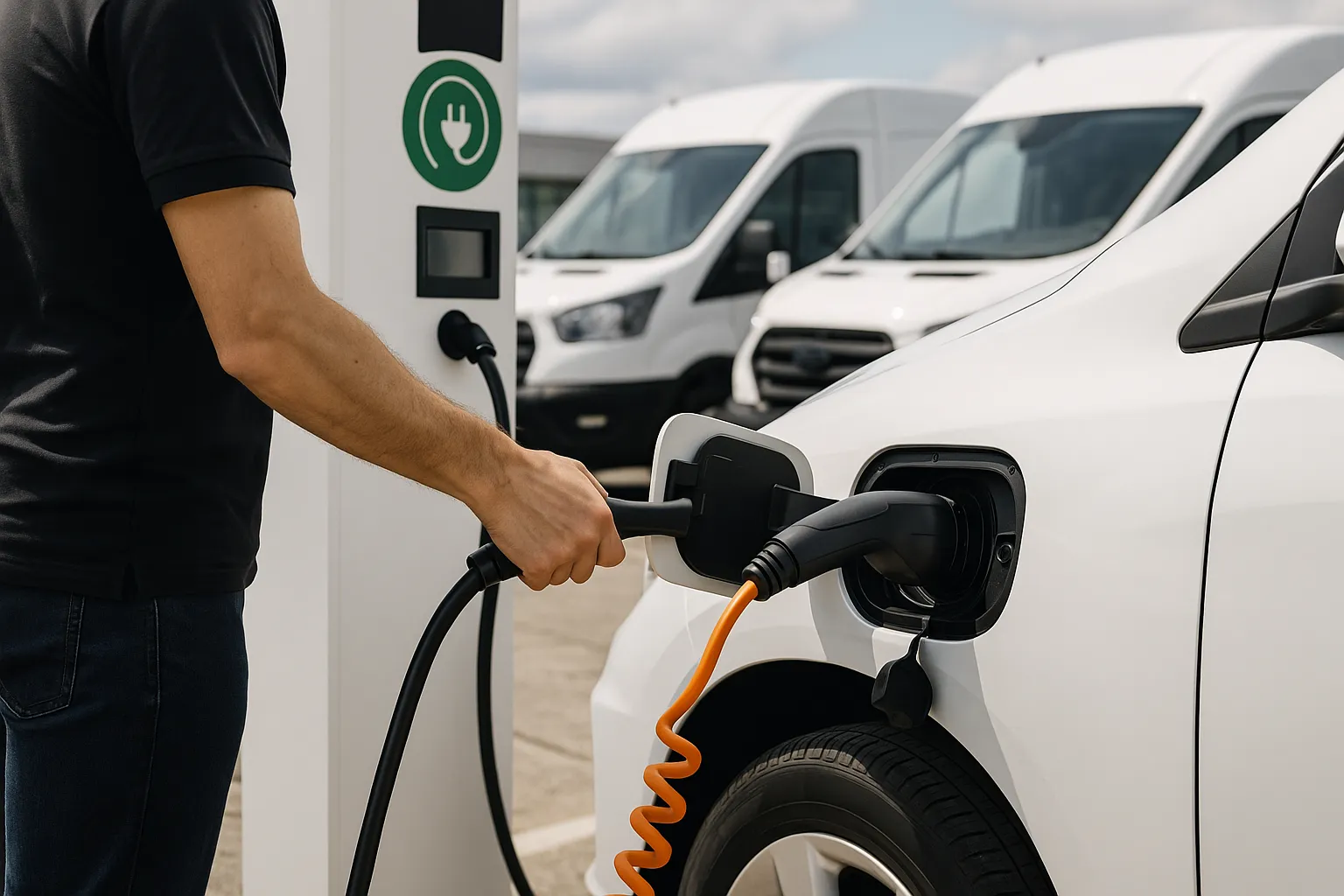
Understanding EV Fleet Adoption
Definition and benefits of electric vehicle fleets
Electric vehicle (EV) fleets refer to a group of battery-powered vehicles used by businesses for various operational purposes. These fleets offer numerous benefits, including reduced emissions, lower operating costs, and improved brand image. AM Autoparts, a leading automotive parts supplier, has recognized the potential of EV fleets and is actively exploring their adoption.
The transition to EV fleets represents a significant shift in how businesses approach transportation. By embracing this technology, companies can not only reduce their carbon footprint but also enjoy substantial cost savings in the long run. Additionally, EV fleets can help businesses comply with increasingly stringent environmental regulations and demonstrate their commitment to sustainability.
- Key benefits of EV fleets:
- Reduced carbon emissions
- Lower fuel and maintenance costs
- Improved brand reputation
- Compliance with environmental regulations
- Enhanced employee satisfaction
Current state of EV fleet adoption
The adoption of EV fleets is gaining momentum across various industries. Many forward-thinking companies are recognizing the advantages of electrifying their vehicle fleets and are taking steps to make the transition. However, the rate of adoption varies significantly depending on factors such as geographical location, industry sector, and company size.
In recent years, we’ve seen a surge in EV fleet adoption among delivery companies, ride-sharing services, and municipal organizations. This trend is expected to continue as battery technology improves and charging infrastructure expands. AM Autoparts has been closely monitoring these developments to better serve the evolving needs of its customers.
| Industry Sector | EV Fleet Adoption Rate |
| Delivery Services | High |
| Ride-sharing | Medium-High |
| Municipal Organizations | Medium |
| Corporate Fleets | Low-Medium |
| Construction | Low |
Key drivers for businesses transitioning to EV fleets
Several factors are driving the transition to EV fleets among businesses. One of the primary motivators is the potential for significant cost savings over the lifetime of the vehicles. As battery technology improves and production scales up, the initial cost of EVs is becoming more competitive with traditional internal combustion engine vehicles.
Environmental concerns and corporate sustainability goals are also playing a crucial role in the decision to adopt EV fleets. Many companies are setting ambitious targets to reduce their carbon emissions, and electrifying their vehicle fleets is a tangible way to make progress towards these goals. Additionally, government incentives and regulations are encouraging businesses to make the switch to electric vehicles.
- Key drivers for EV fleet adoption:
- Cost savings potential
- Environmental sustainability goals
- Government incentives and regulations
- Improved vehicle performance and reliability
- Enhanced brand image and customer perception
Economic Advantages of EV Fleet Adoption
Cost savings on fuel and maintenance
One of the most compelling economic advantages of EV fleet adoption is the significant cost savings on fuel and maintenance. Electric vehicles have fewer moving parts compared to traditional internal combustion engine vehicles, which translates to lower maintenance costs and reduced downtime for repairs.
Fuel costs for EVs are also substantially lower than those for gasoline or diesel-powered vehicles. Electricity rates are generally more stable than fuel prices, allowing businesses to better predict and manage their operating costs. AM Autoparts has observed that many of their customers who have adopted EV fleets report substantial savings on their fuel expenses.
- Fuel cost comparison (per 100 miles):
- Gasoline vehicle: $12-$15
- Electric vehicle: $3-$5
- Potential savings: 60-75%
Operational benefits and improved efficiency
EV fleets offer several operational benefits that can lead to improved efficiency for businesses. Electric vehicles provide instant torque, which can result in better acceleration and performance, particularly in urban environments with frequent stops and starts. This can lead to reduced travel times and increased productivity for fleet operators.
Moreover, EVs are quieter than traditional vehicles, which can be advantageous for businesses operating in noise-sensitive areas or during night-time hours. The reduced noise pollution can also contribute to improved driver comfort and potentially lower stress levels for fleet operators.
- Operational benefits of EV fleets:
- Improved vehicle performance
- Reduced noise pollution
- Lower driver fatigue
- Enhanced route optimization potential
- Simplified fleet management through telematics
Long-term ROI for businesses
While the initial investment in EV fleets may be higher than that of traditional vehicles, the long-term return on investment (ROI) can be substantial. The combination of lower operating costs, reduced maintenance expenses, and potential government incentives can result in a favorable total cost of ownership (TCO) for businesses adopting EV fleets.
As battery technology continues to improve and production scales up, the upfront costs of electric vehicles are expected to decrease further, making the ROI even more attractive. AM Autoparts has been advising its customers to consider the long-term financial benefits when evaluating the transition to EV fleets.
| Cost Factor | Traditional Fleet | EV Fleet |
| Initial Purchase Price | Lower | Higher |
| Fuel Costs | Higher | Lower |
| Maintenance Costs | Higher | Lower |
| Resale Value | Lower | Higher |
| Total Cost of Ownership | Higher | Lower |
Environmental Impact of EV Fleet Adoption
Reduction in carbon emissions
One of the most significant environmental benefits of EV fleet adoption is the substantial reduction in carbon emissions. Electric vehicles produce zero tailpipe emissions, which can dramatically decrease a company’s carbon footprint, especially when paired with renewable energy sources for charging.
The impact of this reduction in emissions becomes even more pronounced as fleets scale up. For large businesses with extensive vehicle fleets, the transition to EVs can result in a considerable decrease in their overall greenhouse gas emissions. This aligns with AM Autoparts’ commitment to supporting sustainable transportation solutions.
- Carbon emission reduction potential:
- Small fleet (10 vehicles): 30-40 tons CO2/year
- Medium fleet (50 vehicles): 150-200 tons CO2/year
- Large fleet (100+ vehicles): 300+ tons CO2/year
Conservation of natural resources
EV fleet adoption contributes to the conservation of natural resources in several ways. By reducing dependence on fossil fuels, electric vehicles help preserve non-renewable energy sources. Additionally, the manufacturing process for EVs typically requires fewer raw materials compared to traditional vehicles, further contributing to resource conservation.
The shift towards electric vehicles also promotes the development and use of renewable energy sources. As more businesses adopt EV fleets, there is an increased demand for clean energy, which can drive investment in solar, wind, and other renewable power generation methods.
- Resources conserved through EV adoption:
- Fossil fuels (oil, natural gas)
- Metals used in traditional engine components
- Water (used in oil extraction and refining)
- Land (reduced need for oil exploration)
Supporting sustainable energy grids
The adoption of EV fleets can play a crucial role in supporting and advancing sustainable energy grids. As more electric vehicles connect to the grid, there is potential for implementing smart charging strategies that can help balance energy demand and supply. This can lead to a more efficient and resilient energy infrastructure.
Furthermore, EV fleets can serve as mobile energy storage units, potentially participating in vehicle-to-grid (V2G) systems. This technology allows electric vehicles to feed energy back into the grid during peak demand periods, helping to stabilize the power supply and reduce strain on the electrical infrastructure.
| Grid Support Feature | Description | Benefit |
| Smart Charging | Optimized charging based on grid demand | Reduced strain on power infrastructure |
| Load Balancing | Shifting charging to off-peak hours | Improved grid stability |
| V2G Technology | Feeding energy back to the grid | Enhanced energy resilience |
| Renewable Integration | Supporting increased renewable energy adoption | Cleaner overall energy mix |
Overcoming Challenges in EV Fleet Adoption
Addressing range anxiety and charging infrastructure
One of the primary challenges in EV fleet adoption is addressing range anxiety and ensuring adequate charging infrastructure. Range anxiety refers to the concern that an electric vehicle may not have sufficient charge to reach its destination. To overcome this, businesses need to carefully plan their routes and strategically place charging stations.
Investing in a robust charging infrastructure is crucial for successful EV fleet adoption. This includes installing charging stations at company facilities, partnering with public charging networks, and potentially collaborating with other businesses to share charging resources. AM Autoparts has been working with fleet operators to identify optimal charging solutions that meet their specific operational needs.
- Strategies to address range anxiety:
- Route optimization software
- Real-time battery monitoring systems
- Strategic placement of charging stations
- Driver training on efficient EV operation
- Backup plans for unexpected situations
Managing initial investment costs
The higher upfront costs of electric vehicles compared to traditional vehicles can be a significant barrier to EV fleet adoption. However, businesses can employ various strategies to manage these initial investment costs effectively. This may include phased implementation of EV fleets, leasing options, and taking advantage of government incentives and grants.
It’s essential for businesses to conduct a comprehensive total cost of ownership (TCO) analysis when considering EV fleet adoption. This analysis should account for factors such as lower fuel and maintenance costs, potential tax benefits, and improved resale value of electric vehicles.
| Cost Management Strategy | Description |
| Phased Implementation | Gradually replacing fleet vehicles with EVs |
| Leasing Options | Reducing upfront costs through leasing agreements |
| Government Incentives | Utilizing available tax credits and grants |
| TCO Analysis | Considering long-term savings in decision-making |
| Partnerships | Collaborating with other businesses to share costs |
Training and educating fleet managers and drivers
Successful EV fleet adoption requires comprehensive training and education for fleet managers and drivers. This includes familiarizing them with the unique characteristics of electric vehicles, optimal charging practices, and strategies for maximizing range and efficiency.
Fleet managers need to be trained on new maintenance procedures, charging infrastructure management, and EV-specific fleet management software. Drivers should receive instruction on efficient driving techniques for EVs, proper charging etiquette, and troubleshooting common issues. AM Autoparts has developed training programs to help its customers smoothly transition to EV fleets.
- Key training areas for EV fleet adoption:
- EV technology basics
- Charging procedures and best practices
- Efficient driving techniques
- Maintenance and troubleshooting
- EV-specific safety protocols
- Use of fleet management software
Best Practices for Successful EV Fleet Adoption
Developing a comprehensive implementation strategy
A successful EV fleet adoption requires a well-thought-out implementation strategy. This strategy should encompass all aspects of the transition, from vehicle selection and infrastructure development to employee training and performance monitoring. It’s crucial to involve key stakeholders from various departments in the planning process to ensure all perspectives are considered.
The implementation strategy should also include clear timelines, milestones, and key performance indicators (KPIs) to track progress. Regular reviews and adjustments to the strategy may be necessary as the adoption process unfolds and new challenges or opportunities arise.
- Key components of an EV fleet implementation strategy:
- Fleet assessment and vehicle selection
- Charging infrastructure planning
- Employee training and engagement
- Performance monitoring and reporting
- Maintenance and support procedures
- Financial planning and budgeting
Selecting the right electric vehicles for your fleet
Choosing the appropriate electric vehicles for your fleet is crucial for successful adoption. Factors to consider include range requirements, payload capacity, charging speed, and total cost of ownership. It’s important to evaluate multiple EV models and compare their specifications against your operational needs.
AM Autoparts recommends conducting pilot programs with a small number of EVs before committing to a large-scale fleet transition. This allows businesses to gather real-world data on vehicle performance and identify any potential issues or necessary adjustments to their operations.
| Vehicle Type | Best Suited For | Key Considerations |
| Light-duty EVs | Urban deliveries, service calls | Range, maneuverability |
| Medium-duty EVs | Regional deliveries, utility work | Payload capacity, charging time |
| Heavy-duty EVs | Long-haul transport, construction | Battery weight, charging infrastructure |
Optimizing charging solutions and infrastructure
Developing an efficient charging infrastructure is critical for the success of EV fleet adoption. This involves determining the optimal mix of charging options, including depot charging, public charging networks, and potentially mobile charging solutions. The charging strategy should align with the fleet’s operational patterns and vehicle types.
Businesses should also consider smart charging technologies that can optimize charging schedules based on electricity rates and grid demand. This can help reduce charging costs and support grid stability. Additionally, future-proofing the charging infrastructure by planning for potential expansion and technological advancements is essential.
- Charging infrastructure considerations:
- Charging speed requirements
- Number and location of charging points
- Load management systems
- Integration with fleet management software
- Scalability for future fleet growth
- Backup power solutions
Enhancing Brand Image through EV Fleet Adoption
Improving customer perception
Adopting EV fleets can significantly enhance a company’s brand image by demonstrating a commitment to sustainability and innovation. Customers are increasingly conscious of environmental issues and tend to view businesses that take proactive steps towards reducing their carbon footprint more favorably. This positive perception can lead to increased customer loyalty and potentially attract new environmentally conscious clients.
Moreover, EV fleets can serve as moving advertisements for a company’s sustainability initiatives. Branded electric vehicles on the road can catch the attention of potential customers and spark conversations about the company’s environmental efforts. AM Autoparts has observed that many of its clients who have adopted EV fleets report improved customer engagement and positive feedback regarding their sustainability efforts.
- Ways EV fleets improve customer perception:
- Visible commitment to sustainability
- Reduced noise pollution in communities
- Innovative company image
- Alignment with customer values
- Potential for unique marketing opportunities
Demonstrating corporate social responsibility
EV fleet adoption is a tangible way for businesses to demonstrate their commitment to corporate social responsibility (CSR). By reducing emissions and promoting sustainable transportation, companies can show that they are taking concrete actions to address environmental concerns. This commitment to CSR can have far-reaching effects, including improved relationships with stakeholders, enhanced employee morale, and potential regulatory advantages.
Furthermore, adopting EV fleets can inspire other businesses and individuals to consider electric vehicles, creating a ripple effect that contributes to broader environmental goals. Companies that lead the way in EV adoption may be recognized as industry leaders in sustainability, further bolstering their reputation.
| CSR Aspect | EV Fleet Contribution |
| Environmental Stewardship | Reduced carbon emissions and air pollution |
| Community Impact | Decreased noise pollution and improved air quality |
| Innovation Leadership | Adoption of cutting-edge sustainable technology |
| Stakeholder Engagement | Alignment with environmentally conscious values |
| Regulatory Compliance | Proactive approach to environmental regulations |
Attracting environmentally conscious clients and employees
The adoption of EV fleets can be a powerful tool for attracting both environmentally conscious clients and employees. Many consumers prefer to do business with companies that share their values, particularly when it comes to environmental sustainability. By showcasing their commitment to clean transportation, businesses can appeal to this growing segment of eco-friendly consumers.
Similarly, potential employees, especially younger generations, are increasingly considering a company’s environmental stance when making career decisions. Organizations with EV fleets may be seen as more forward-thinking and aligned with the values of environmentally conscious job seekers. This can give businesses an edge in attracting and retaining top talent in a competitive job market.
- Benefits for attracting clients and employees:
- Alignment with personal values
- Perception of innovation and progress
- Potential for employee EV incentive programs
- Improved workplace satisfaction
- Enhanced company reputation in the job market
Government Incentives and Policies Supporting EV Fleet Adoption
Federal and state tax credits
Government incentives play a crucial role in accelerating EV fleet adoption by making the transition more financially attractive for businesses. At the federal level, tax credits are available for the purchase of electric vehicles, which can significantly reduce the upfront costs. These credits vary depending on the vehicle’s battery capacity and other factors.
Many states also offer additional tax credits or rebates for EV purchases, further enhancing the financial benefits of fleet electrification. These state-level incentives can vary widely, with some offering substantial benefits to businesses adopting EV fleets. AM Autoparts advises its customers to thoroughly research available incentives in their specific locations to maximize potential savings.
- Types of EV tax credits:
- Federal tax credits (up to $7,500 per vehicle)
- State-specific tax credits
- Local government incentives
- Corporate tax deductions for EV infrastructure
Grants and rebates for businesses
In addition to tax credits, many government agencies and utilities offer grants and rebates to businesses adopting EV fleets. These financial incentives can help offset the costs of purchasing electric vehicles and installing charging infrastructure. Some programs specifically target fleet electrification, providing substantial support for businesses making the transition.
Grants and rebates can come from various sources, including state energy offices, air quality management districts, and electric utilities. These programs often have specific eligibility requirements and application processes, so businesses should carefully review the options available in their area.
| Incentive Type | Description | Potential Benefit |
| Vehicle Purchase Grants | Direct financial assistance for EV acquisition | Up to 50% of vehicle cost |
| Charging Infrastructure Rebates | Reimbursement for installing charging stations | Up to 80% of installation costs |
| Workplace Charging Grants | Support for employee charging facilities | Varies by program |
| Fleet Conversion Assistance | Comprehensive support for fleet electrification | Can include vehicles, infrastructure, and consulting |
Regulatory support for EV infrastructure development
Governments at various levels are implementing regulations and policies to support the development of EV charging infrastructure. These measures are crucial for addressing one of the main barriers to EV adoption: the availability of convenient charging options. Regulatory support can take many forms, including:
- Mandates for new construction to include EV-ready parking spaces
- Streamlined permitting processes for charging station installations
- Building code updates to facilitate EV charging infrastructure
- Public-private partnerships to expand charging networks
These regulatory efforts aim to create a more favorable environment for EV adoption, making it easier for businesses to implement and maintain EV fleets. AM Autoparts has observed that regions with strong regulatory support for EV infrastructure tend to see faster growth in fleet electrification.
- Key areas of regulatory support:
- Zoning laws accommodating charging stations
- Utility regulations promoting EV-friendly rate structures
- Right-of-way access for charging infrastructure
- Standardization of charging equipment and protocols
- Incentives for renewable energy integration with EV charging
Future Trends in EV Fleet Adoption
Advancements in battery technology
The future of EV fleet adoption is closely tied to advancements in battery technology. Researchers and manufacturers are continuously working to improve battery performance, focusing on increasing energy density, reducing charging times, and extending battery life. These advancements will directly address some of the current limitations of EV fleets, such as range anxiety and long charging times.
Solid-state batteries are one promising technology that could revolutionize EV performance. These batteries offer higher energy density, faster charging times, and improved safety compared to current lithium-ion batteries. As these and other battery technologies mature, they will likely accelerate the adoption of EV fleets by addressing key operational concerns.
- Expected battery technology advancements:
- Increased energy density (400-500 Wh/kg)
- Faster charging (80% charge in 15 minutes)
- Extended battery life (up to 1 million miles)
- Reduced production costs
- Improved safety and stability
Integration of autonomous driving features
The integration of autonomous driving features with electric vehicles is another trend that could significantly impact EV fleet adoption. Autonomous capabilities can enhance the efficiency and safety of fleet operations, potentially reducing labor costs and improving route optimization. As these technologies mature, they may become increasingly common in EV fleets.
Autonomous features can range from advanced driver assistance systems (ADAS) to fully self-driving vehicles. These technologies can work synergistically with electric powertrains, optimizing energy use and further reducing operational costs. AM Autoparts is closely monitoring these developments to ensure they can support their customers as these technologies become more prevalent in fleet operations.
| Autonomous Feature | Benefit for EV Fleets |
| Adaptive Cruise Control | Improved energy efficiency |
| Automated Parking | Optimized charging station usage |
| Platooning | Reduced energy consumption for multiple vehicles |
| Self-Driving Capabilities | Potential for 24/7 operations and reduced labor costs |
Expansion of fast-charging networks
The expansion of fast-charging networks is crucial for the widespread adoption of EV fleets, particularly for businesses that operate over long distances or require quick turnaround times. As charging technology improves and infrastructure expands, the convenience and practicality of operating EV fleets will increase significantly.
Ultra-fast charging stations, capable of providing hundreds of miles of range in just 10-15 minutes, are beginning to emerge. These stations will be particularly beneficial for fleet operations, allowing for quick charging during short stops or driver breaks. The strategic placement of these charging stations along major transportation routes will be key to supporting long-distance EV fleet operations.
- Fast-charging network developments:
- Increasing number of 350 kW+ charging stations
- Strategic placement along major highways and at fleet depots
- Integration with renewable energy sources
- Smart grid technologies for load balancing
- Improved user interfaces and payment systems
FAQs
What are the challenges of implementing EV fleet adoption?
Implementing EV fleet adoption comes with several challenges. One of the primary obstacles is the higher upfront cost of electric vehicles compared to traditional ones, which can strain initial budgets. Another significant challenge is the need for adequate charging infrastructure, which may require substantial investment and careful planning. Range anxiety is also a concern, particularly for fleets that cover long distances or operate in areas with limited charging options. Additionally, businesses may face challenges in training staff to operate and maintain EVs effectively. Lastly, the rapidly evolving technology in the EV sector can make it difficult for businesses to make long-term fleet decisions, as they must balance current needs with future advancements
How does EV fleet adoption impact operational costs?
EV fleet adoption can significantly reduce operational costs for businesses. The primary impact comes from lower fuel costs, as electricity is generally cheaper than gasoline or diesel on a per-mile basis. Additionally, electric vehicles have fewer moving parts, which translates to reduced maintenance costs and less frequent servicing. While the initial purchase price of EVs may be higher, the total cost of ownership over the vehicle’s lifetime is often lower due to these operational savings. Furthermore, many regions offer incentives for EV adoption, which can further offset costs. However, businesses need to factor in the investment required for charging infrastructure when calculating the overall financial impact of EV fleet adoption.
What are the main benefits of EV fleet adoption?
The main benefits of EV fleet adoption include significant cost savings on fuel and maintenance, reduced carbon emissions, and improved brand image. Electric vehicles have lower operating costs compared to traditional vehicles, which can lead to substantial savings over time. They also produce zero tailpipe emissions, helping businesses reduce their carbon footprint and meet sustainability goals. Additionally, adopting EV fleets can enhance a company’s reputation as an environmentally responsible organization, potentially attracting environmentally conscious customers and employees..