

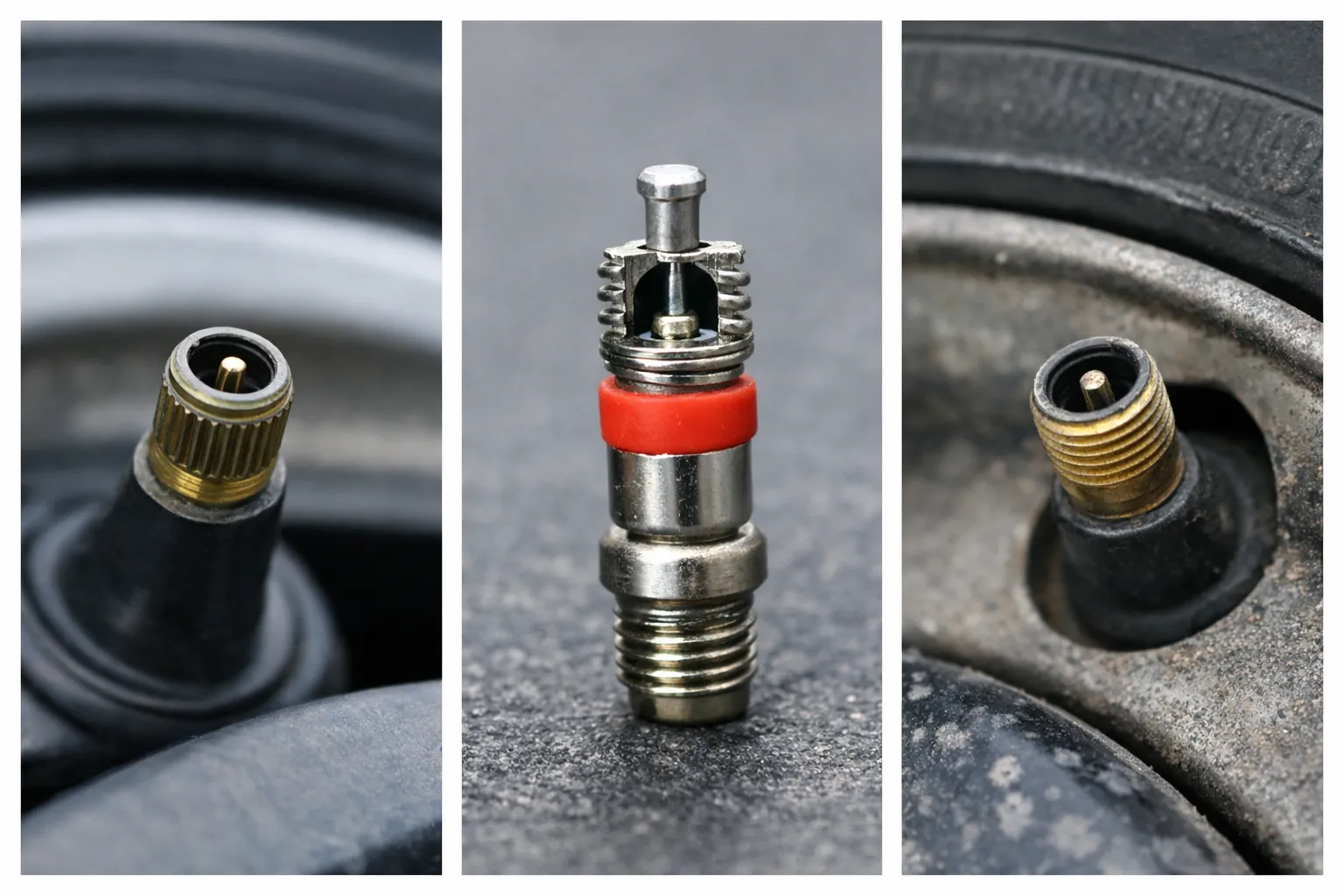
It’s a small part that most drivers barely think about, until it goes missing. You glance at your tire and notice the air valve cap is gone. Naturally, the question pops up:
Will my tire lose air if the valve cap is missing?
The short answer is no, not immediately.
The long answer, and the one that really matters for tire health, is more nuanced.
Will a Tire Lose Air Without a Valve Cap?
No, tires do not usually lose air immediately if the valve cap is missing.
That’s because the valve core inside the valve stem (commonly a Schrader valve) is responsible for holding air inside the tire, not the cap itself.
However, while a missing valve cap is not an emergency, it is not harmless either. Over time, the absence of a cap can lead to:
- Dirt contamination
- Moisture intrusion
- Valve core damage
- Slow, hard-to-detect air leaks
What Is a Tire Valve Stem and Valve Core?
To understand why a tire doesn’t instantly deflate without a cap, it helps to know how the system works.
Valve Stem
The valve stem is the small rubber or metal tube that sticks out of the wheel. It provides access for inflating or deflating the tire.
Valve Core (The Real Seal)
Inside the valve stem is a spring-loaded valve core. This component:
- Seals air inside the tire
- Opens only when pressed (during inflation or deflation)
- Automatically closes to prevent air loss
As long as the valve core is clean and undamaged, the tire will hold air—even without a cap.
What Does the Tire Valve Cap Actually Do?
Although small, the valve cap plays an important protective role.
1. Protects the Valve Core
The cap shields the valve stem from:
- Dust
- Dirt
- Sand
- Road salt
- Water
2. Prevents Debris-Induced Air Leaks
If debris enters the valve stem:
- It can press against the valve pin
- Prevent the valve from sealing properly
- Cause slow air leakage
3. Acts as a Secondary Seal
While not airtight by itself, the cap provides extra insurance if the valve core begins to fail.
What Happens If the Valve Cap Is Missing?
No Immediate Air Loss (In Most Cases)
In normal conditions:
- The tire stays inflated
- Pressure remains stable
- Driving feels normal
This is why many drivers go days—or even weeks—without noticing an issue.
Increased Risk Over Time
Without a cap, the valve stem is exposed to:
- Road grime
- Moisture
- Temperature fluctuations
Over time, these elements can compromise the valve core and cause gradual pressure loss.
Can a Missing Valve Cap Cause a Slow Leak?
Yes—indirectly.
A missing valve cap does not cause air to escape on its own, but it creates the conditions for a slow leak to develop.
Here’s how it happens:
- Dirt or sand enters the valve stem
- Debris interferes with the valve core seal
- The valve fails to close completely
- Air leaks out slowly over days or weeks
These leaks are often:
- Hard to detect
- Misdiagnosed as punctures
- Responsible for repeated low-pressure warnings
Corrosion and Moisture: The Hidden Risk
Moisture is one of the biggest threats to an exposed valve stem.
How Moisture Causes Damage
- Water enters the valve stem
- Metal valve cores begin to corrode
- Corrosion weakens the valve’s sealing ability
In humid or coastal regions—or areas with frequent car washing—this risk increases significantly.
Once corrosion sets in:
- Valve cores may need replacement
- In severe cases, the entire valve stem must be changed
Is Driving Without a Valve Cap Dangerous?
Short-Term: Not Dangerous
If the valve core is in good condition:
- You can safely drive
- Tire pressure remains stable
- No immediate safety risk
Long-Term: Not Recommended
Over time, driving without a cap can lead to:
- Slow leaks
- Underinflated tires
- Reduced fuel efficiency
- Uneven tire wear
- Increased blowout risk
So while it won’t strand you today, it can cost you later.
How Long Can You Drive Without a Valve Cap?
There’s no exact timeline, but general guidance is:
- Short-term (days): Usually fine
- Medium-term (weeks): Risk increases
- Long-term (months): Likely to cause valve damage
Because valve caps are inexpensive and easy to replace, delaying is rarely worth the risk.
Signs a Missing Valve Cap Is Causing Problems
Watch for these warning signs:
- Tire pressure warning light turning on repeatedly
- One tire losing air faster than others
- Hissing sound near the valve stem
- Visible dirt or corrosion inside the valve
If you notice these symptoms, inspect the valve core immediately.
How to Fix a Missing Valve Cap (Simple Solution)
Step 1: Replace the Valve Cap
Valve caps are:
- Cheap
- Universally sized
- Available at gas stations, auto stores, and service centers
Step 2: Inspect the Valve Core
If air loss continues:
- Have a technician check the valve core
- Replace the core if necessary
Step 3: Check Tire Pressure
After replacing the cap:
- Inflate the tire to the recommended PSI
- Monitor pressure over the next few days
Plastic vs Metal Valve Caps: Which Is Better?
Plastic Valve Caps
Pros:
- Affordable
- Corrosion-resistant
- Lightweight
Cons:
- Easier to lose
- Less durable
Metal Valve Caps
Pros:
- More durable
- Better sealing in harsh conditions
Cons:
- Can corrode if not coated
- May seize onto the valve stem
Best Choice:
High-quality plastic caps or corrosion-resistant metal caps with internal seals.
Final Thoughts
A missing tire valve cap won’t cause immediate air loss, but it does compromise long-term tire health. By leaving the valve stem exposed, you increase the risk of slow leaks, corrosion, and unnecessary tire pressure issues.
Bottom line:
It’s not an emergency. But it’s a problem worth fixing immediately.
Replacing a valve cap takes seconds, costs almost nothing, and helps protect one of the most critical safety components on your vehicle.
Frequently Asked Questions (FAQs)
1. Will my tire go flat overnight if the valve cap is missing?
No. The valve core holds the air in. A missing cap usually does not cause immediate deflation.
2. Is the valve cap just decorative?
No. While small, it protects the valve core from dirt, moisture, and corrosion.
3. Can I drive on the highway without a valve cap?
Yes, short-term driving is generally safe, but replace the cap as soon as possible.
4. Why does my tire keep losing air even after adding a cap?
The valve core may already be damaged or contaminated and needs replacement.
5. Are valve caps universal?
Yes. Most passenger vehicles use standard Schrader valve caps.
6. Should I replace valve caps during tire service?
Yes. Many professionals recommend replacing valve caps whenever tires are serviced or replaced.