
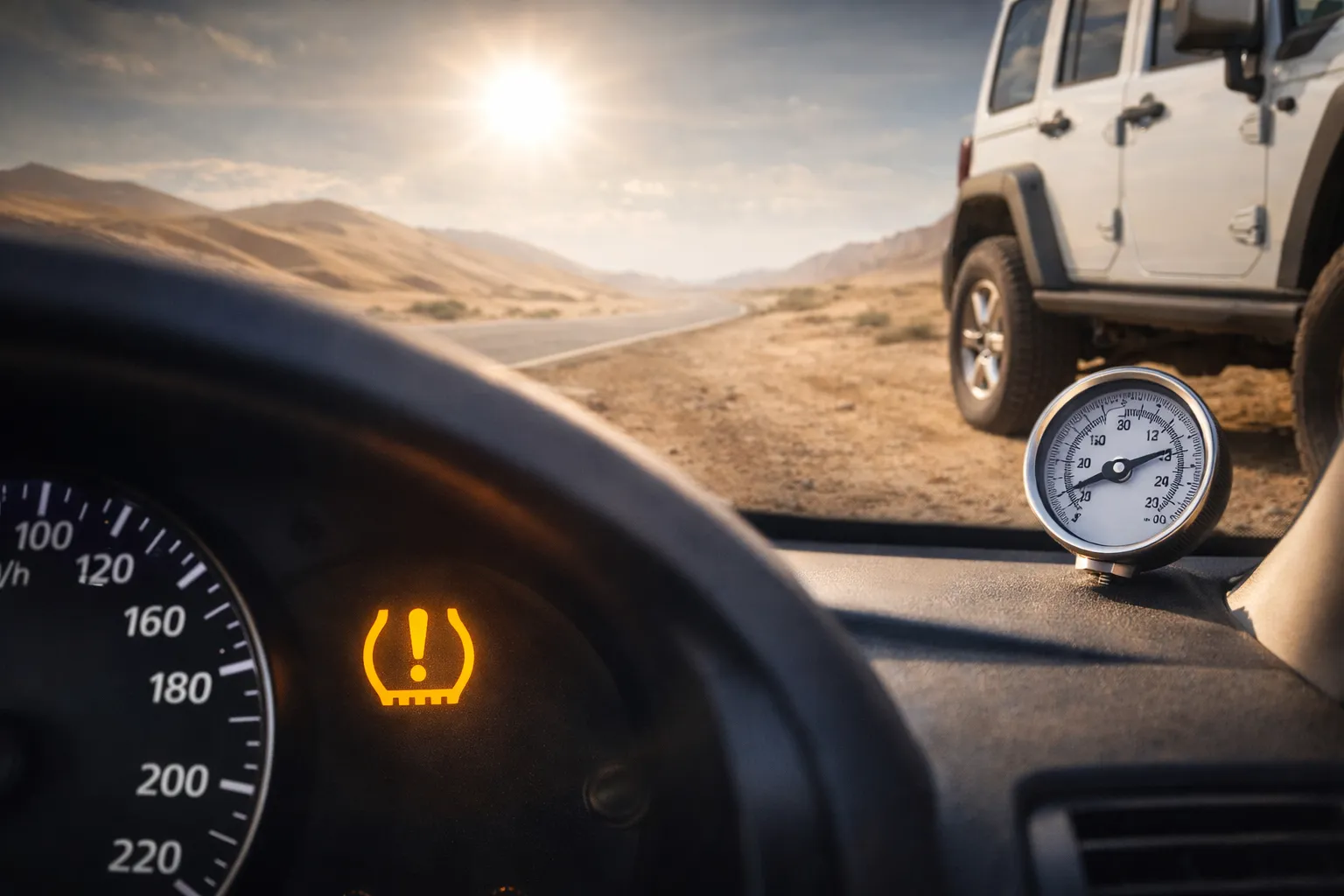
Seeing the low tire pressure warning light on your dashboard can be stressful and confusing, especially when you stop the car, check all four tires, and everything looks completely fine. Many drivers in the UAE experience this situation regularly and assume there must be a puncture or a serious mechanical fault. However, after inspection, the tires appear normal, properly inflated, and safe to drive on. This uncertainty often leads to frustration, unnecessary worry, and sometimes avoidable visits to tire shops or workshops.
This issue is extremely common in the UAE, where extreme heat, long-distance driving, hot road surfaces, and sudden temperature changes affect tire pressure far more than most drivers realize. In many cases, the warning light is not caused by a damaged tire at all, but by how modern vehicles measure and interpret pressure changes. This guide explains why this happens, how UAE conditions play a major role, and what steps you should take, so you can respond correctly instead of guessing or ignoring the warning.
Table of Contents
- What Is the Low Tire Pressure (TPMS) Light?
- Why This Issue Is So Common in the UAE
- 10 Reasons Your Tire Pressure Light Is On But Tires Are Fine
- Quick Diagnosis Table
- How to Reset the Tire Pressure Light
- Is It Safe to Drive With the TPMS Light On?
- When You Should Visit a Workshop
- Preventive Tips for UAE Drivers
- Final Thoughts
- FAQs
1. What Is the Low Tire Pressure (TPMS) Light?
The Tire Pressure Monitoring System (TPMS) is a safety feature designed to alert drivers when tire pressure drops below a safe level. Small electronic sensors, usually installed inside each wheel, continuously measure the air pressure inside the tires and send this data to the vehicle’s onboard computer system. When the system detects that one or more tires have dropped to around 25% below the recommended pressure, the warning light appears on the dashboard.
It is important to understand that the TPMS light does not automatically mean a tire is flat or damaged. It simply means the system has detected a pressure change outside its acceptable range. In UAE vehicles, TPMS lights often turn on even when tires look visually normal due to heat, calibration differences, sensor sensitivity, or minor pressure variations that cannot be seen with the naked eye.
2. Why This Issue Is So Common in the UAE
The UAE’s climate creates unique challenges for tire pressure monitoring that drivers in cooler regions rarely experience. During the day, road surface temperatures can exceed 60°C, which causes the air inside tires to expand significantly while driving. At night or early in the morning, temperatures drop, causing the same air to contract. This constant expansion and contraction directly affects pressure readings.
In addition to temperature changes, long highway drives at high speeds further increase tire heat and pressure fluctuation. Sand, dust, humidity, and hot asphalt also place extra stress on TPMS sensors over time. Many vehicles in the UAE are imported from regions with cooler climates, meaning their TPMS systems may be calibrated differently. As a result, UAE drivers experience TPMS warnings far more frequently, even when their tires are technically safe.
3. 10 Reasons Your Low Tire Pressure Light Is On (But Tires Look Fine)
Below are the most common real-world reasons why your TPMS light may turn on even when your tires appear normal.
1. Temperature Changes (Most Common Reason)
Air expands when hot and contracts when cool. In the UAE, a tire inflated correctly during the afternoon can lose enough pressure overnight to trigger the TPMS light. Once you start driving and the tires warm up again, they may look and feel normal, but the warning light remains because the system already detected the pressure drop. This is especially common during early mornings and seasonal temperature shifts.
2. Tires Were Inflated Incorrectly Earlier
Tires are often inflated at fuel stations using inaccurate gauges, without following manufacturer PSI recommendations, or while the tires are already hot. This creates an incorrect baseline pressure. Even if the tires look fine afterward, the TPMS system detects inconsistencies and activates the warning light.
3. TPMS System Needs Resetting
After inflating tires, rotating wheels, or replacing a tire, many vehicles require a manual TPMS reset. If this step is skipped, the system continues using old pressure data. As a result, the light stays on even though the tires are correctly inflated. This is one of the most common and easily overlooked causes in the UAE.
4. One Tire Is Slightly Low (Not Visually Noticeable)
A tire can be 5–7 PSI low and still look perfectly normal. TPMS sensors are designed to detect small pressure differences that the human eye cannot see. This often occurs in rear tires or on the inner side of the tread, making a pressure gauge essential for accurate checking.
5. Tire Pressure Was Checked While Tires Were Hot
Checking or adjusting tire pressure immediately after driving gives false high readings. Once the tires cool down, pressure drops below the TPMS threshold, triggering the warning later. This is a very common mistake in hot UAE conditions.
6. TPMS Sensor Battery Is Weak
TPMS sensors have internal batteries that typically last 5–7 years. Extreme heat in the UAE can shorten their lifespan. When the battery weakens, the sensor may send inconsistent signals, causing the warning light to turn on even when tire pressure is correct.
7. Tire Rotation or Wheel Replacement
After tire rotation or wheel replacement, the TPMS system may misidentify wheel positions or detect mismatched pressure readings. Without recalibration, the system may continue showing a warning even though all tires are fine.
8. Spare Tire Has Low Pressure
Many SUVs and 4×4 vehicles include the spare tire in the TPMS system. If the spare tire is underinflated, the warning light can turn on even though all four main tires are properly inflated. This is very common in UAE vehicles.
9. TPMS Sensor Damage From Heat or Sand
Extreme heat, sand ingress, and road debris can damage TPMS sensors over time. Even minor damage can cause inaccurate readings and repeated false alerts, especially in desert-driven or off-road vehicles.
10. System Calibration Differences (Imported Vehicles)
Vehicles imported from cooler regions may have TPMS systems calibrated for different climates. In UAE conditions, these systems can become overly sensitive, triggering warnings more often than expected.
4. Quick Diagnosis Table
| Cause | Visual Tire Condition | Risk Level |
| Temperature change | Looks normal | Low |
| Slight pressure drop | Looks normal | Medium |
| TPMS reset needed | Normal | Low |
| Weak sensor battery | Normal | Medium |
| Sensor damage | Normal | Medium |
| Spare tire low | Normal | Low |
| Incorrect inflation | Normal | Medium |
| Calibration issue | Normal | Low |
| Hot tire measurement | Normal | Low |
| Wheel rotation issue | Normal | Low |
5. How to Reset the Low Tire Pressure Light
Most vehicles allow TPMS resetting by:
- Using the dashboard or infotainment menu
- Holding the TPMS reset button
- Driving at a steady speed after inflating tires
Always inflate tires to the manufacturer-recommended PSI when cold, then reset the system. If the warning light returns, a professional inspection is recommended.
6. Is It Safe to Drive With the TPMS Light On?
If you have checked all tires with a proper pressure gauge and confirmed they are correctly inflated, short-distance driving is usually safe. However, ignoring the warning light long-term is not advised, particularly in the UAE where underinflated tires are more prone to overheating and blowouts.
Incorrect tire pressure can reduce fuel efficiency, cause uneven tire wear, affect handling, and increase stopping distances, all of which compromise safety over time.
7. When You Should Visit a Workshop
You should visit a professional workshop if:
- The light stays on after resetting
- The light flashes repeatedly
- Tire pressure readings keep changing
- Your vehicle is more than 5 years old
Early diagnosis helps prevent expensive tire damage and sensor replacement.
8. Preventive Tips for UAE Drivers
- Check tire pressure once a month
- Always measure pressure when tires are cold
- Reset TPMS after tire rotation or inflation
- Inspect the spare tire regularly
- Use reliable TPMS sensors and tires from AM Autoparts UAE
9. Final Thoughts
If your low tire pressure light is on but your tires seem fine, it does not mean your vehicle is malfunctioning—it means the system is doing its job. In the UAE’s harsh climate, small pressure changes happen frequently and should never be ignored. Understanding the real reasons behind the warning allows you to act correctly instead of panicking or overlooking a genuine issue.
By checking tire pressure properly, resetting the system when required, and using reliable TPMS components from AM Autoparts UAE, you can drive with confidence, improve fuel efficiency, and protect your tires—making every journey safer, smoother, and more cost-effective.
10. FAQs
Q1: Can heat alone turn on the TPMS light?
Yes. Temperature changes are the most common cause in the UAE.
Q2: Should I ignore the warning if tires look fine?
No. Always confirm tire pressure with a gauge.
Q3: How long do TPMS sensors last?
Typically 5–7 years under UAE conditions.
Q4: Does tire rotation affect TPMS?
Yes. Recalibration is often required.
Q5: Will incorrect tire pressure affect fuel economy?
Yes. Even small pressure drops can increase fuel consumption.