
Hidden Costs of Importing: How to Calculate Total Landed Cost for Auto Parts in Zambia From Dubai
Zambia’s automotive and transport sectors have expanded rapidly, driven by increased mining activity, commercial trucking, public transport operations, and construction projects. As fleet sizes grow, the need for reliable, affordable automotive parts has also increased. However, limited local availability and high dealer prices have pushed Zambian businesses to import parts directly from global hubs—especially Dubai.
Dubai remains one of the world’s leading automotive parts trading centres, offering access to OEM, aftermarket, and reconditioned components at competitive prices. But importing into Zambia involves more than selecting a supplier and placing an order. Businesses must navigate customs rules, documentation requirements, taxes, duties, and hidden costs.
Why This Guide Matters
- Many Zambian buyers underestimate total landed cost
- Unexpected customs fees can delay shipments
- Importers often face penalties due to incomplete paperwork
- Understanding the process saves time, money, and operational downtime
Step-by-Step: How to Import Auto Parts From Dubai Into Zambia
Importing auto parts into Zambia is straightforward when you understand the full customs workflow. Below is a step-by-step breakdown specifically for B2B buyers, fleet owners, dealers, and workshops.
Step 1: Choose a Reliable Supplier in Dubai
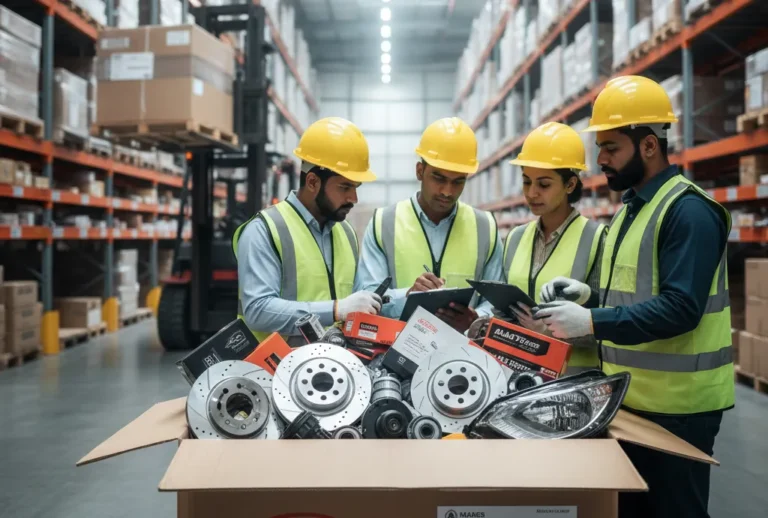
Fleet owners prefer Dubai suppliers like AM Auto Parts because they offer:
- Large inventory of OEM and aftermarket parts
- Competitive pricing
- Export experience with African markets
- Fast air and sea freight options
Step 2: Confirm Product Details & Documentation
Before shipping, ensure you receive:
- Commercial invoice
- Packing list
- Certificate of origin (recommended for larger shipments)
- Harmonized System (HS) codes
- Warranty documentation where applicable
Step 3: Select Shipping Method
- Air Freight: Fastest option (ideal for urgent repairs)
- Sea Freight: Most cost-effective for bulk shipments
- Courier Express: Suitable for small parcels and samples
Step 4: Monitor Arrival at Zambian Port of Entry
Common entry points for auto parts include:
- Kenneth Kaunda International Airport (Lusaka)
- Simon Mwansa Kapwepwe Airport (Ndola)
- Chirundu border post
- Kazungula One-Stop Border Post
Step 5: Customs Clearance & Duty Assessment
Zambia Revenue Authority (ZRA) evaluates:
- Import duties
- Value Added Tax (VAT)
- Excise duty (select items)
- Surtaxes, if applicable
Understanding Zambia’s Customs Duties for Auto Parts
ZRA applies different duties depending on part type, vehicle category, and HS code. Importers must understand these to avoid surprises.
Common Duty Categories
- Import Duty: Usually 15%–25% for most auto parts
- VAT: Standard rate of 16%
- Excise Duty: Varies for certain vehicle-related items
- Carbon Emission Surcharges: Rare but possible for specific components
Exemptions & Special Rules
Some mining or agricultural businesses can qualify for reduced or zero-duty rates under specific schemes. Always confirm with ZRA.
Hidden Costs of Importing Auto Parts Into Zambia
Many importers only calculate product price + shipping, but overlook multiple hidden fees that affect total landed cost.
Common Hidden Costs
- Clearing agent fees
- Terminal handling charges
- Warehouse/demurrage fees (if goods remain uncollected)
- Inspection fees
- Documentation charges
- Bank transfer fees for international payments
- Border processing fees
Operational Costs Often Ignored
- Downtime from delayed shipments
- Replacement rental costs for fleet vehicles
- Additional insurance for high-value cargo
How to Calculate Total Landed Cost: Zambia Importing Formula
Use this simple formula to estimate your full cost before ordering:
Total Landed Cost =
**(Product Price + International Shipping)
- Import Duty
- VAT
- Clearing Charges
- Port & Handling Fees
- Inland Transport (if needed)**
Below is a table showing a real-world example for buyers importing from Dubai.
Example Table: Total Landed Cost for Importing Auto Parts Into Zambia
| Cost Item | Amount (USD) | Notes |
| Product Price | $1,000 | Value of auto parts ordered |
| Shipping (Air) | $180 | From Dubai to Lusaka |
| Import Duty (15%) | $150 | Based on product CIF value |
| VAT (16%) | $133 | Applied after duty |
| Clearing Agent Fee | $60 | Average Lusaka rate |
| Handling & Documentation | $40 | Terminal charges |
| Total Landed Cost | $1,563 | Estimated total payable |
Why Zambian Businesses Prefer Dubai for Auto Parts
Zambian transport companies, workshops, and fleet owners increasingly choose Dubai suppliers because of:
Key Advantages
- Better pricing than local dealerships
- Wide availability of OEM and aftermarket components
- Bulk order discounts
- Experience exporting to Southern Africa
- Faster delivery compared to Asia or Europe
Popular Parts Imported by Zambian Companies
- Engine components
- Brake systems
- Filters (oil, air, fuel)
- Suspension & steering parts
- Body panels & bumpers
- Electrical components & sensors
- Truck and bus parts for fleets
AM Auto Parts: Your Trusted Export Partner for Zambia
With years of experience supplying African markets, AM Auto Parts offers Zambian businesses:
- Reliable OEM and premium aftermarket parts
- Verified genuine products
- Export documentation assistance
- Fast air and sea shipping
- Support for bulk B2B orders
We ensure your fleet stays on the road—with minimal downtime and maximum cost efficiency.
FAQs:
1. How long does it take to ship auto parts from Dubai to Zambia?
- Air freight: 3–7 days
- Courier (DHL/Aramex): 3–5 days
- Sea freight via Dar es Salaam or Durban: 20–32 days
Delivery time depends on the shipping method and customs clearance speed.
2. What documents do I need for customs clearance in Zambia?
Typically required documents include:
- Commercial invoice
- Packing list
- Certificate of origin (optional but recommended)
- Airway bill / Bill of lading
- HS codes
- Importer Taxpayer Identification Number (TPIN)
3. What are the major hidden costs when importing auto parts into Zambia?
Common hidden charges include:
- Clearing agent fees
- Terminal handling fees
- Storage or warehouse charges
- Border processing fees
- Bank transfer fees
Understanding these helps avoid unexpected financial surprises.
4. Are Zambian import duties high for automotive parts?
Import duty generally ranges between 15%–25%, depending on the part type. VAT at 16% is also applied. Certain industries may qualify for reduced rates.
5. Can Zambia import both OEM and aftermarket parts from Dubai?
Yes. Suppliers like AM Auto Parts export:
- Genuine OEM components
- High-quality aftermarket brands
- Reconditioned parts (upon request)
This gives Zambian buyers flexibility based on budget and fleet needs.
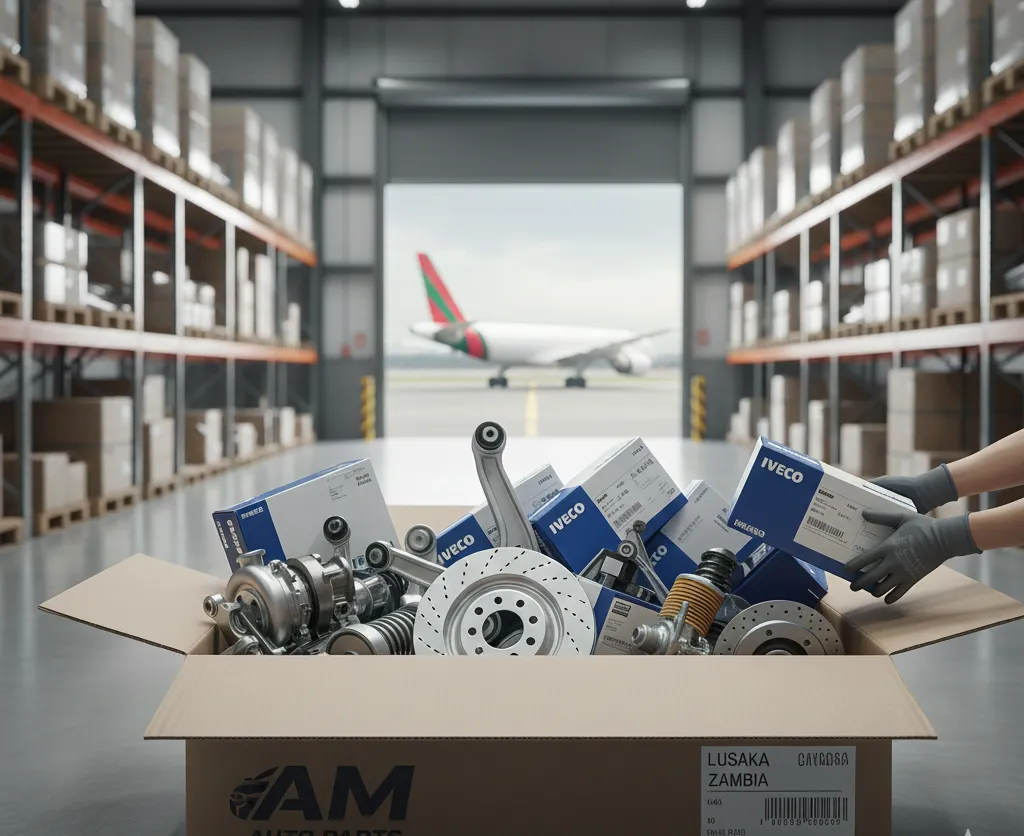
6. Does AM Auto Parts ship directly to Lusaka and Ndola?
Yes. We ship to Lusaka, Ndola, Kitwe, Livingstone, and any major Zambian city through air cargo, express courier, or freight forwarding partners.
7. How do I calculate total landed cost before ordering?
Use this formula:
Product Cost + Shipping + Duty + VAT + Clearing Fees + Handling Fees = Total Landed Cost
We can also provide a cost estimate before shipment.
8. Can I order in bulk for my workshop or fleet in Zambia?
Yes. AM Auto Parts offers special pricing for wholesale and fleet owners, including palletized shipments and consolidated freight.
9. How do I avoid fake auto parts in Zambia?
Always buy from verified exporters. AM Auto Parts provides:
- Manufacturer packaging
- Genuine OEM codes
- Photo and video verification
- Certificate of origin for large orders
10. How can I place an order with AM Auto Parts?
You can contact our sales team via WhatsApp, phone, or email.
Share the part numbers or vehicle details, and we’ll prepare a quotation with shipping options to Zambia.