
When it comes to vehicle safety, your braking system is non-negotiable—especially in the UAE, where high temperatures, long highway drives, and stop-and-go city traffic put extra stress on brake components. One of the most critical yet often overlooked parts of this system is the brake caliper.
As an SEO expert with over 10 years of experience in the automotive aftermarket—and following Google’s latest EEAT and Helpful Content guidelines—this in-depth guide is written to help UAE drivers, workshops, fleet owners, and spare-parts buyers understand the early and advanced symptoms of a bad brake caliper, why they happen, and what to do next.
This blog is optimized for AM Autoparts UAE, targeting search intent such as:
- bad brake caliper symptoms
- brake caliper problems UAE
- car brake issues in hot weather
- brake caliper replacement UAE
Table of Contents
- What Is a Brake Caliper and Why It Matters
- How UAE Climate Affects Brake Calipers
- 10 Clear Symptoms of a Bad Brake Caliper
- Symptoms Comparison Table (Quick Diagnosis)
- What Causes Brake Caliper Failure?
- Is It Safe to Drive With a Bad Brake Caliper?
- Repair vs Replacement: What’s Best in the UAE?
- Preventive Maintenance Tips for UAE Drivers
- Final Thoughts
- FAQs
1. What Is a Brake Caliper and Why It Matters
A brake caliper is the component that clamps the brake pads against the brake disc (rotor) when you press the brake pedal. This clamping action creates friction, which slows down or stops your vehicle.
Modern vehicles in the UAE—whether Japanese, American, Korean, or European—mostly use disc brakes on the front wheels, and many use them on all four wheels. The brake caliper plays a central role in:
- Vehicle stopping power
- Brake balance
- Steering stability during braking
- Overall road safety
When a brake caliper fails, it doesn’t just reduce braking performance—it can damage rotors, wear pads unevenly, overheat the system, and even cause accidents.
2. How UAE Climate Affects Brake Calipers
The UAE’s environment is particularly harsh on braking systems:
- Extreme heat (45°C+ in summer) accelerates seal wear
- Sand and dust contaminate caliper slide pins
- Highway driving causes sustained brake heat buildup
- Urban traffic leads to frequent braking and overheating
- Coastal humidity increases corrosion risk
Because of this, brake calipers in the UAE often fail earlier than expected, especially if maintenance is delayed or low-quality parts are used.
3. 10 Symptoms of a Bad Brake Caliper
Below are the 10 most common and critical symptoms of a failing brake caliper. Each symptom is explained in detail, with causes and risks specific to UAE driving conditions.
1. Vehicle Pulls to One Side When Braking
If your car pulls left or right when you press the brake pedal, it’s one of the earliest signs of a bad caliper.
This usually happens when:
- One caliper piston is stuck
- Brake pressure is applied unevenly
- One wheel brakes harder than the other
In UAE highways, this can be extremely dangerous at high speeds, especially during sudden braking.
2. Uneven or Rapid Brake Pad Wear
A healthy brake caliper applies even pressure on both brake pads. When a caliper is faulty:
- One pad wears much faster
- Inner and outer pads wear unevenly
- Pads may wear down to metal quickly
This is very common in UAE vehicles due to heat-damaged caliper seals and dry slide pins.
3. Burning Smell While Driving
A strong burning smell, especially after city driving or downhill braking, often indicates:
- A seized caliper
- Pads constantly rubbing against the rotor
- Excessive heat buildup
In UAE summer temperatures, this smell can appear suddenly and should never be ignored.
4. Reduced Fuel Efficiency
Many drivers don’t realize this, but a stuck brake caliper increases rolling resistance, causing:
- Higher fuel consumption
- Sluggish acceleration
- Extra engine load
If your fuel average drops without reason, brake drag from a faulty caliper may be the cause.
5. Excessive Brake Dust on One Wheel
If one wheel has significantly more brake dust than the others, it’s a strong indicator of caliper trouble.
This happens when:
- Pads are constantly engaged
- The caliper doesn’t release fully
In UAE conditions, dust accumulation is already high—so uneven brake dust stands out clearly.
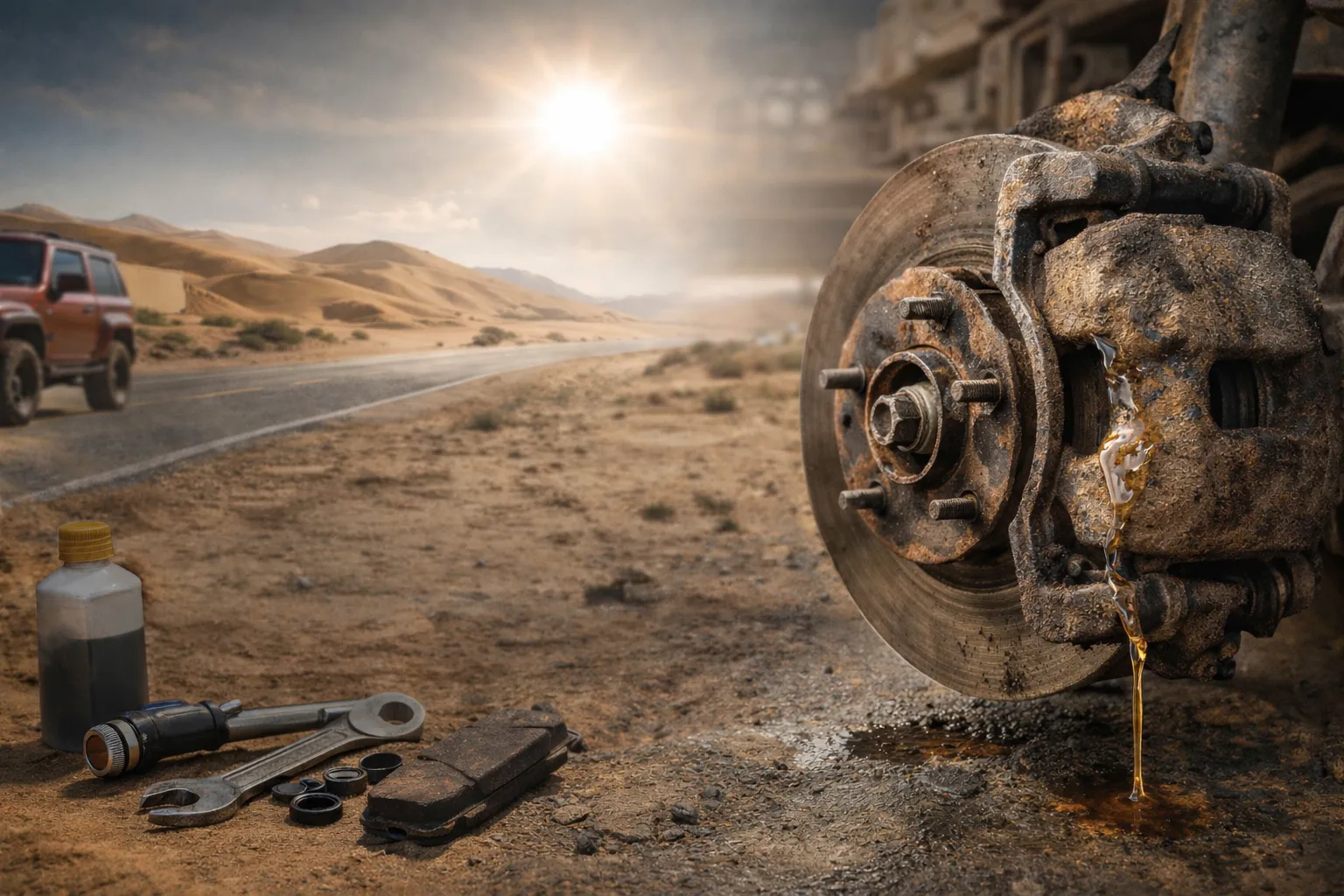
6. Brake Fluid Leak Near the Wheel
Brake fluid leaks near the wheel rim or tire often point to:
- A damaged caliper piston seal
- Cracked caliper housing
- Overheated rubber components
Brake fluid leaks are a serious safety issue and require immediate attention.
7. Soft or Spongy Brake Pedal
A failing caliper can cause:
- Loss of hydraulic pressure
- Air entering the brake system
- Inconsistent pedal feel
In emergency braking situations, this delay can be dangerous—especially in fast-moving UAE traffic.
8. Clunking or Metallic Noise While Braking
Loose or damaged caliper components may cause:
- Clunking sounds
- Rattling noises
- Metal-on-metal grinding
These sounds often worsen over time and indicate mechanical failure inside the caliper assembly.
9. Overheating Wheel or Rim
After driving, if one wheel feels much hotter than the others, the caliper may be stuck.
Overheating can lead to:
- Warped brake rotors
- Tire damage
- Complete brake failure
This symptom is especially common during long UAE highway drives.
10. Brake Warning Light (In Advanced Cases)
While most caliper issues are mechanical, severe cases can trigger:
- Brake system warning light
- ABS alerts (due to uneven braking)
This usually means the issue has progressed and should not be delayed further.
4. Brake Caliper Symptoms Comparison Table
| Symptom | Likely Cause | Risk Level |
| Car pulls while braking | Seized caliper piston | High |
| Uneven pad wear | Stuck slide pins | Medium |
| Burning smell | Constant brake drag | High |
| Reduced fuel economy | Caliper not releasing | Medium |
| Excess brake dust | Pad overheating | Medium |
| Brake fluid leak | Seal failure | Critical |
| Soft brake pedal | Pressure loss | High |
| Noise while braking | Loose caliper hardware | Medium |
| Hot wheel rim | Overheating caliper | Critical |
| Warning light | Advanced brake fault | Critical |
5. What Causes Brake Caliper Failure?
Common causes in the UAE include:
- Heat-damaged rubber seals
- Lack of lubrication on slide pins
- Low-quality replacement parts
- Ignoring early warning signs
- Delayed brake fluid changes
6. Is It Safe to Drive With a Bad Brake Caliper?
No. Driving with a faulty brake caliper can lead to:
- Longer stopping distances
- Brake failure at high speed
- Damage to rotors and hubs
- Higher repair costs
In UAE road conditions, even a short delay in braking response can result in serious accidents.
7. Repair vs Replacement: What’s Best in the UAE?
| Option | When Suitable | Recommendation |
| Caliper repair kit | Minor seal damage | Short-term only |
| Reconditioned caliper | Budget option | Acceptable |
| New brake caliper | Long-term reliability | Best choice |
For UAE conditions, high-quality new brake calipers are strongly recommended for safety and durability.
8. Preventive Maintenance Tips for UAE Drivers
- Inspect brakes every 10,000–15,000 km
- Use heat-resistant brake grease
- Flush brake fluid every 2 years
- Avoid cheap, low-grade calipers
- Buy parts from trusted UAE suppliers like AM Autoparts
9. Final Thoughts
A bad brake caliper is not a minor issue—it’s a direct threat to your safety. In the UAE’s demanding driving environment, recognizing the early symptoms and taking fast action can save lives, money, and vehicles.
If you notice any of the 10 symptoms listed above, inspect your braking system immediately and replace faulty parts with quality brake calipers from AM Autoparts UAE—designed for durability, heat resistance, and reliable performance.
Safe brakes mean safe driving. Don’t compromise.
10. FAQs
Q1: Can a bad caliper damage my brake rotor?
Yes. A stuck caliper causes constant friction, leading to warped or scored rotors.
Q2: How long do brake calipers last in the UAE?
Typically 80,000–120,000 km, but heat and driving style can reduce lifespan.
Q3: Can I replace just one brake caliper?
Technically yes, but replacing calipers in pairs ensures balanced braking.
Q4: Are aftermarket brake calipers reliable?
High-quality aftermarket calipers from trusted suppliers are reliable and cost-effective.
Q5: What happens if I ignore caliper symptoms?
Ignoring them can lead to brake failure, accidents, and expensive repairs.