
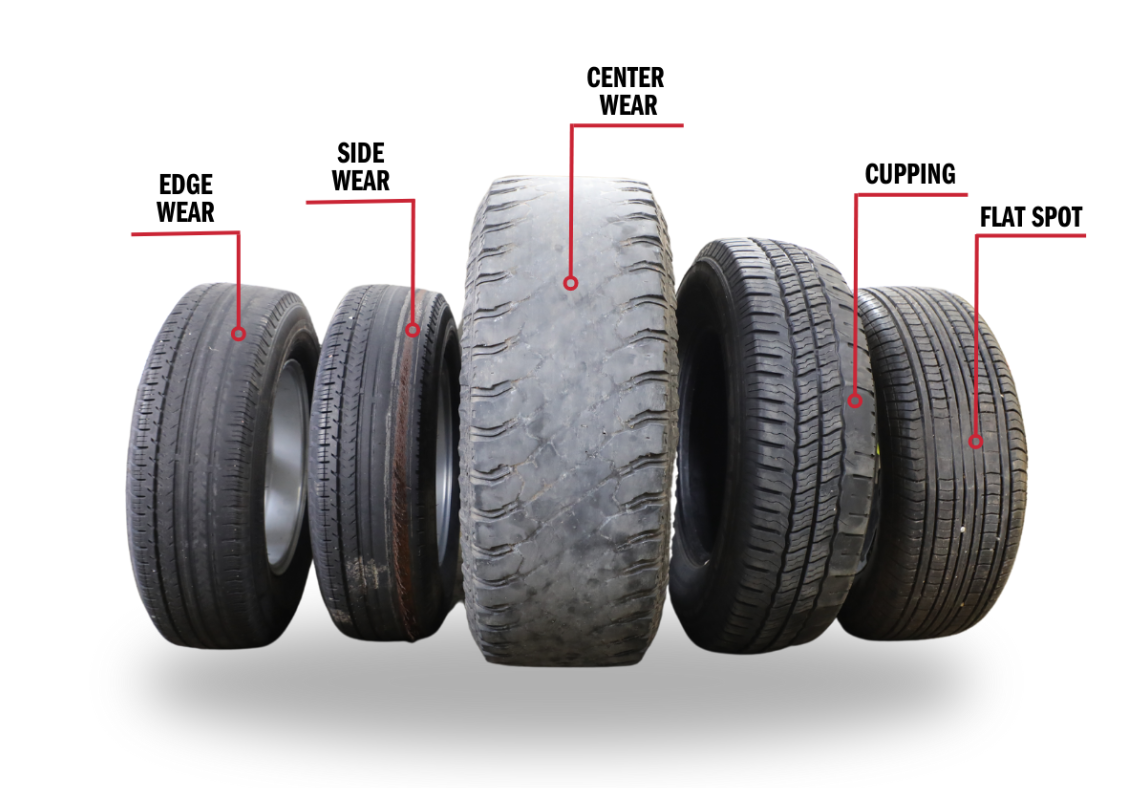
Before starting your vehicle for a drive, take a close look at your tires. Do you notice unevenly worn patches, scooped-out indents, or a rough, choppy surface on the tread? If yes, your vehicle may be suffering from tire cupping, one of the most overlooked but serious forms of uneven tire wear.
Tire cupping doesn’t just shorten tire life. It affects ride comfort, vehicle stability, braking performance, and long-term suspension health. In regions like Dubai and the wider GCC, where high temperatures, fast highways, heavy SUVs, and long-distance driving are common, tire cupping is more frequent than many drivers realize.
Tire cupping is a type of uneven tire wear where scalloped or cup-shaped dips form around the tire tread. It happens when the tire bounces instead of rolling smoothly, usually due to worn suspension parts, unbalanced tires, or wheel misalignment. Common symptoms include vibration, humming noise, and rough ride quality. Tire cupping can be prevented with regular tire rotation, proper wheel alignment, balanced tires, correct tire pressure, and timely suspension inspections.
Key Causes of Tire Cupping
- Worn shocks, struts, or suspension bushings
- Tire imbalance
- Wheel misalignment
- Incorrect tire pressure
- Bad wheel bearings
- Low-quality tires or bent rims
How to Prevent Tire Cupping
- Rotate tires every 5,000–8,000 miles
- Maintain manufacturer-recommended tire pressure
- Balance tires regularly
- Check wheel alignment at least once a year
- Inspect suspension components periodically
Table of Contents
- What Is Tire Cupping?
- Tire Cupping Overview (Simple Explanation)
- What Does Tire Cupping Look and Feel Like?
- Why Tire Cupping Happens (Root Causes Explained)
- Common Causes of Tire Cupping
- Worn Suspension Components
- Tire Imbalance
- Wheel Misalignment
- Improper Tire Pressure
- Bad Wheel Bearings
- Low-Quality Tires
- Bent Rims or Wheels
- Why Tire Cupping Is Common in Dubai & GCC Countries
- How to Diagnose Tire Cupping Step by Step
- How to Fix Tire Cupping (What Actually Works)
- How to Prevent Tire Cupping Long-Term
- When Should You Replace Cupped Tires?
- FAQs About Tire Cupping
What Is Tire Cupping?
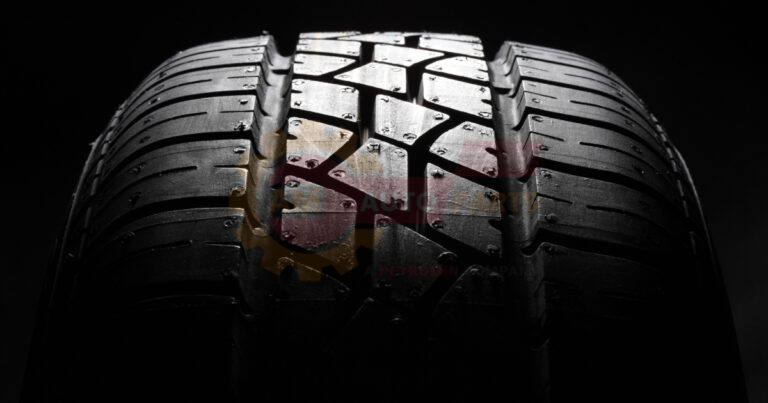
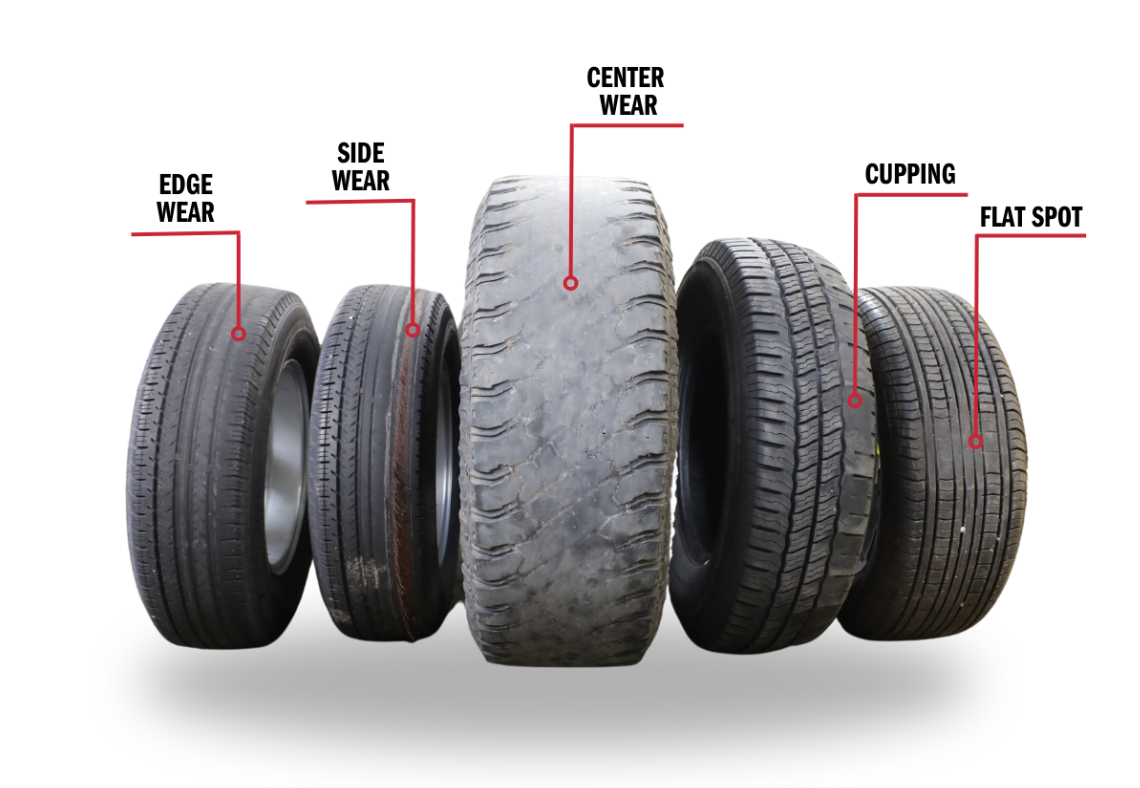
Tire cupping is a form of uneven tire wear where the tread develops scalloped dips, hollow patches, or cup-shaped depressions around the circumference of the tire.
Instead of wearing evenly, the tire makes inconsistent contact with the road. This usually happens because the tire is bouncing rather than rolling smoothly, often due to suspension or alignment issues.
Over time, this repeated bouncing and uneven pressure causes:
- Loud humming or roaring road noise
- Steering wheel vibration
- Poor ride comfort
- Reduced traction and braking efficiency
Cupping is also commonly referred to as:
- Scalloping
- Choppy tire wear
- Feathered tread wear
- Irregular tire wear
Tire Cupping – Overview
Think of tire cupping as a loss of control between your tire and the road.
In a healthy vehicle:
- The suspension absorbs bumps
- The tire maintains constant road contact
- Tread wears evenly
In a vehicle with suspension, balance, or alignment problems:
- The tire momentarily lifts and slams back onto the road
- Certain tread sections hit harder than others
- Rubber wears away in patches
Over time, this creates a rough, bumpy tread surface, similar to what you might see on aggressive off-road tires, but completely unintentional and harmful.
In severe cases, drivers describe the sensation as if:
- The tire is hopping
- The car is vibrating uncontrollably
- The road feels uneven even when it’s smooth
What Does Tire Cupping Look, Feel, and Sound Like?
Visual Signs
- Scoop-like or circular depressions in the tread
- Uneven tread depth across the tire
- A choppy or sawtooth pattern along the tread edges
Driving Feel
- Steering wheel vibration (especially at highway speeds)
- Bouncing or wobbling sensation
- Reduced driving comfort
Noise Symptoms
- Humming or roaring noise
- Noise increases with speed
- Sound often mistaken for wheel bearing failure
Why Tire Cupping Happens
Tire cupping almost never happens randomly. It is usually a symptom, not the root problem.
When your vehicle’s suspension, wheels, or tires fail to work in harmony, the tire cannot maintain consistent pressure against the road. This leads to uneven wear zones forming around the tread.
In simple terms:
If your tire is bouncing, wobbling, or misaligned, cupping will eventually appear.
Common Causes of Tire Cupping
1. Worn Suspension Components (Most Common Cause)
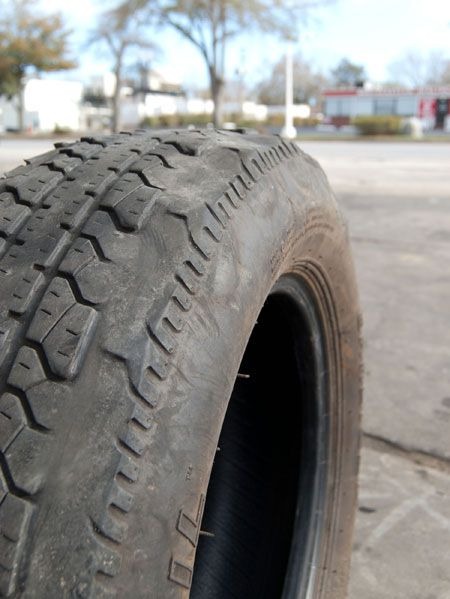
Worn or damaged shock absorbers, struts, springs, or bushings allow excessive vertical movement of the tire.
When suspension components fail:
- The tire bounces instead of staying planted
- Road contact becomes inconsistent
- Rubber wears faster in specific spots
This issue is especially common in:
- SUVs and light-duty trucks
- Vehicles frequently driven on rough or uneven roads
- Cars with delayed suspension maintenance
2. Tire Imbalance
Tire imbalance occurs when weight is unevenly distributed around the tire.
Even a small imbalance can:
- Cause repeated vertical hopping
- Stress certain tread sections more than others
- Accelerate scalloped wear
This is why tire balancing is essential after:
- Installing new tires
- Tire rotations
- Hitting potholes or curbs
3. Wheel Misalignment
Misaligned wheels do not point straight or remain parallel to each other.
This leads to:
- Uneven road contact
- Excessive friction on certain tread blocks
- Cupping, feathering, or heel-to-toe wear
Even slight misalignment can cause serious long-term tire damage, especially on high-speed highways common across the GCC.
4. Improper Tire Pressure
Both underinflation and overinflation contribute to irregular wear.
- Underinflated tires flex excessively
- Overinflated tires reduce contact area
In hot climates like Dubai:
- Tire pressure rises quickly
- Incorrect cold inflation settings are common
- Pressure fluctuations accelerate uneven wear
5. Bad or Loose Wheel Bearings
Failing wheel bearings can cause:
- Side-to-side wobble
- Unstable wheel rotation
- Localized tread wear
Wheel bearing issues are often misdiagnosed as tire noise or alignment problems.
6. Low-Quality Tires
Not all tires are manufactured equally.
Low-quality tires may have:
- Weak internal belts
- Inconsistent rubber compounds
- Poor structural support
These tires are more vulnerable to cupping, especially when combined with suspension or balance issues.
7. Bent Rims or Wheels
Bent rims, often from potholes or curb impacts—cause:
- Irregular tire rotation
- Uneven load distribution
- Persistent cupping even after balancing
Bent inner flanges are particularly difficult to spot without lifting the vehicle.
Why Tire Cupping Is Common in Dubai & GCC Countries
Several regional factors increase the risk of tire cupping:
- Extreme heat affecting tire pressure
- Long-distance highway driving at high speeds
- Heavy vehicles (SUVs, 4x4s, pickups)
- Speed bumps and uneven road transitions
- Delayed suspension servicing
Combined, these conditions make preventive maintenance essential, not optional.
How to Diagnose Tire Cupping (Step by Step)
- Park on a flat surface and engage the parking brake
- Visually inspect all four tires
- Run your hand across the tread surface
- Look for dips, scallops, or rough patches
- Check for steering vibration during driving
- Perform a bounce test to assess suspension
- Inspect alignment and balance professionally
If cupping is found on the inner tread, misalignment is often the cause.
How to Fix Tire Cupping
Fixing tire cupping starts with fixing the cause, not the tire alone.
Step 1: Repair Suspension Issues
Replace worn shocks, struts, bushings, or springs.
Step 2: Balance the Tires
Correct weight distribution eliminates repetitive hopping.
Step 3: Perform Wheel Alignment
Ensure all wheels meet factory specifications.
Step 4: Rotate Tires
If cupping is mild, rotation can help even out wear over time.
Step 5: Replace Severely Cupped Tires
Once cupping is deep, tire replacement is the only safe solution.
How to Prevent Tire Cupping Long-Term
Check Tire Pressure Regularly
Always follow manufacturer-recommended PSI, especially during hot weather.
Rotate Tires Every 5,000–8,000 Miles
This prevents localized wear patterns.
Inspect Suspension Annually
Early detection saves tires and money.
Balance Tires Periodically
Especially after rotations or road impacts.
Replace Tires at the Right Time
Tires with 4/32” tread depth or less are more prone to damage and suspension stress.
When Should You Replace Cupped Tires?
You should replace your tires if:
- Cupping is deep and uneven
- Noise and vibration persist after repairs
- Tread depth is below safe limits
- Ride quality is compromised
Driving on severely cupped tires is unsafe and can damage other vehicle components.
Frequently Asked Questions (FAQs)
1. Is tire cupping dangerous?
Yes. Tire cupping reduces traction, increases stopping distance, and affects vehicle stability.
2. Can tire cupping be fixed without replacing tires?
Mild cupping can sometimes be managed with rotation and repairs, but severe cupping requires replacement.
3. Does wheel alignment stop tire cupping?
Alignment helps prevent future cupping but will not reverse existing damage.
4. Can bad shocks cause tire cupping?
Absolutely. Worn shocks are one of the leading causes of cupping.
5. How long does it take for tire cupping to develop?
Cupping can develop over several thousand miles if underlying issues are ignored.
6. Is tire cupping more common on SUVs?
Yes. Heavier vehicles place more stress on suspension and tires.
Final Thoughts
Tire cupping is not just a cosmetic issue, it’s a clear warning sign that your vehicle’s suspension, alignment, or balance needs attention. Ignoring it leads to premature tire failure, uncomfortable driving, and increased repair costs.
With regular inspections, proper tire maintenance, and timely suspension care, tire cupping is completely preventable, even in demanding driving conditions like those found across Dubai and the GCC.