
Table of Contents
- Introduction
- What Is a Drive Shaft (Propeller Shaft)?
- Why the Drive Shaft Is Critical in a Vehicle
- How a Drive Shaft Works
- Main Components of a Drive Shaft
- Types of Drive Shafts
- Drive Shaft vs Propeller Shaft
- Importance of Drive Shafts in UAE Driving Conditions
- Common Drive Shaft Problems and Symptoms
- Causes of Drive Shaft Failure
- Drive Shaft Maintenance and Care
- When Should You Replace a Drive Shaft?
- Drive Shafts Used in Different Vehicle Types
- Final Thoughts
- FAQs
Introduction
Every vehicle relies on a complex system to convert engine power into motion. While engines and transmissions often take the spotlight, several supporting components are equally vital for smooth and safe driving. One of the most important yet commonly overlooked parts is the drive shaft, also known as the propeller shaft.
The drive shaft plays a central role in transferring power from the transmission to the wheels. Without it, even the most powerful engine would be unable to move the vehicle. Because it operates underneath the vehicle and out of sight, many drivers only become aware of it when a problem arises.
In regions like the UAE, where vehicles face extreme heat, long highway drives, desert conditions, and heavy loads, understanding the drive shaft becomes even more important. This guide by AM AutoParts explains everything you need to know—from basic concepts to UAE-specific considerations.
What Is a Drive Shaft (Propeller Shaft)?
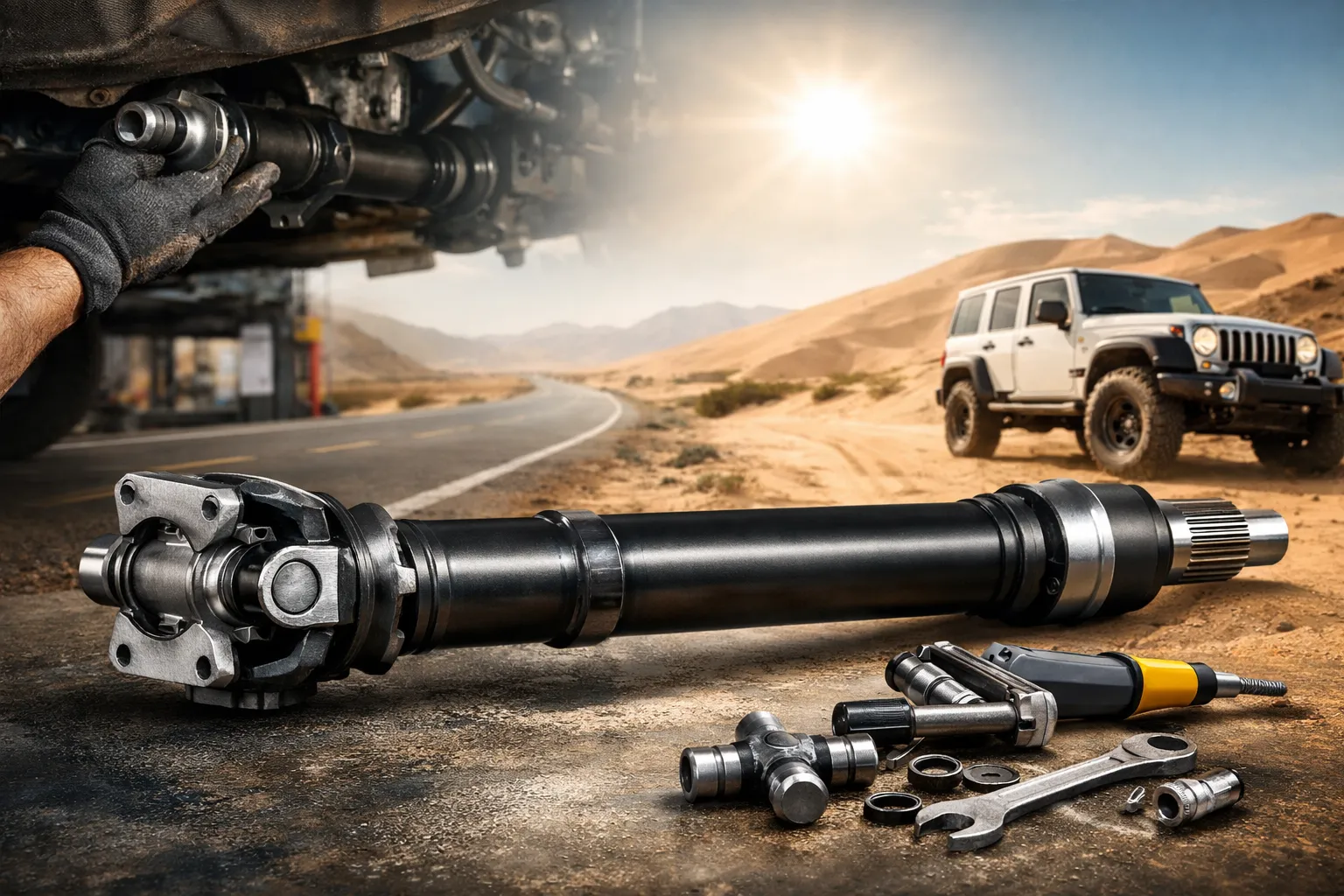
A drive shaft is a rotating mechanical component designed to transmit torque and rotational force from the vehicle’s transmission to the differential, and ultimately to the wheels. It is typically a long cylindrical tube engineered to rotate at high speeds while carrying heavy loads.
The term propeller shaft is often used interchangeably with drive shaft. Historically, it originated from marine engineering, but in automotive terminology, both names refer to the same component.
In rear-wheel-drive (RWD) and four-wheel-drive (4WD) vehicles, the drive shaft connects the transmission to the rear or front differential. In front-wheel-drive (FWD) vehicles, power is transferred using shorter shafts known as CV axles, which perform a similar function.
Why the Drive Shaft Is Critical in a Vehicle
The drive shaft is a core part of the drivetrain system. Its main job is to ensure that engine power reaches the wheels efficiently and smoothly, regardless of road conditions or suspension movement.
As a vehicle drives over bumps, accelerates, or carries loads, the distance and angle between the transmission and differential constantly change. The drive shaft absorbs these changes while continuing to rotate smoothly.
A damaged or poorly balanced drive shaft can lead to vibrations, noise, power loss, and even drivetrain failure. In severe cases, it can become a safety hazard, especially at high speeds.
How a Drive Shaft Works
When the engine generates power, it is regulated by the transmission and then sent to the drive shaft. The drive shaft rotates at high speed, transferring this rotational energy to the differential, which then distributes power to the wheels.
Universal joints (U-joints) or constant velocity (CV) joints are installed at the ends of the drive shaft. These joints allow flexibility, enabling the shaft to rotate even when the transmission and differential are not perfectly aligned.
To ensure smooth operation, drive shafts are precision-balanced. Any imbalance can cause vibration, excessive wear, and reduced driving comfort.
Main Components of a Drive Shaft
A complete drive shaft assembly consists of several critical parts:
Shaft Tube
The main body of the drive shaft, usually made from steel, aluminum, or carbon fiber. It must be strong enough to handle torque while remaining lightweight.
Universal Joints (U-Joints)
These joints allow the shaft to flex and rotate at different angles, accommodating suspension movement.
Slip Yoke or Slip Joint
This component allows the drive shaft to extend and retract as the vehicle moves, preventing stress on the transmission.
Flanges and Yokes
They connect the drive shaft securely to the transmission and differential.
Each of these components must function properly for smooth and reliable power delivery.
Types of Drive Shafts
Different vehicle designs require different drive shaft configurations:
Single-Piece Drive Shaft
Common in passenger cars with shorter wheelbases. Simple, durable, and efficient.
Two-Piece Drive Shaft
Used in longer vehicles such as SUVs and trucks. Includes a center support bearing for stability.
CV Drive Shaft
Found mainly in front-wheel-drive vehicles, allowing smooth power transfer during steering.
Carbon Fiber Drive Shaft
Used in high-performance and luxury vehicles for reduced weight and improved efficiency.
Drive Shaft vs Propeller Shaft
In practical automotive use, there is no functional difference between a drive shaft and a propeller shaft. The difference lies only in terminology. Both refer to the same component responsible for transmitting power from the transmission to the wheels.
Importance of Drive Shafts in UAE Driving Conditions
The UAE presents unique challenges for vehicle components. Extreme temperatures, long-distance highway driving, desert terrain, and heavy vehicle loads place additional stress on drivetrain parts.
High heat accelerates wear in joints, seals, and lubricants. Sand and dust can enter bearings and joints, particularly in off-road vehicles. SUVs, pickup trucks, and commercial vehicles—very common in the UAE—rely heavily on strong and durable propeller shafts.
Because of these conditions, regular inspection and high-quality replacement parts are essential for long-term reliability in the UAE.
Common Drive Shaft Problems and Symptoms
Some of the most common signs of drive shaft issues include:
- Vibration while driving, especially at higher speeds
- Clunking or knocking sounds when shifting gears
- Clicking noises during turns (CV joint related)
- Shuddering during acceleration
These symptoms should never be ignored, as they often indicate progressive wear.
Causes of Drive Shaft Failure
Drive shaft issues usually develop due to:
- Lack of lubrication in joints
- Heat-related degradation
- Sand and dust contamination
- Improper installation or imbalance
- Excessive torque from heavy loads or towing
In the UAE, environmental factors often accelerate these issues if maintenance is neglected.
Drive Shaft Maintenance and Care
Regular inspection is key to extending the life of a drive shaft. Greaseable joints should be lubricated according to service intervals. Vehicles used for desert driving or heavy-duty work should be checked more frequently.
Preventive maintenance helps avoid sudden failures and expensive drivetrain repairs.
When Should You Replace a Drive Shaft?
A drive shaft should be replaced if it is bent, cracked, severely corroded, or if joints have failed beyond repair. In many cases, replacing the complete assembly is more reliable than repairing individual components.
For UAE drivers, proactive replacement often saves money by preventing breakdowns in harsh conditions. High-quality replacements ensure smooth performance and long-term durability.
Drive Shafts Used in Different Vehicle Types
- Passenger Cars: Lightweight shafts for efficiency
- SUVs & 4x4s: Heavy-duty propeller shafts for off-road use
- Pickup Trucks & Commercial Vehicles: Reinforced shafts for constant loads
- Luxury & Performance Cars: Precision-balanced, lightweight shafts
Each type is engineered to meet specific driving demands.
Final Thoughts
The drive shaft, or propeller shaft, is a vital component that ensures your vehicle moves smoothly, safely, and efficiently. Understanding how it works and how UAE driving conditions affect it helps vehicle owners make smarter maintenance and replacement decisions.
At AM AutoParts, we focus on supplying reliable, high-quality drive shafts suited for UAE roads, climate, and vehicle types. Whether you are a workshop, fleet operator, or individual buyer, choosing the right parts ensures long-term performance and peace of mind.
FAQs
What happens if a drive shaft fails while driving?
It can cause immediate loss of power and potentially damage other drivetrain components, posing a serious safety risk.
How often should drive shafts be inspected in the UAE?
Every 6–12 months, especially for SUVs, 4x4s, and commercial vehicles.
Can extreme heat damage a drive shaft?
Heat mainly affects joints, grease, and seals, accelerating wear if not maintained.
Are aftermarket drive shafts reliable?
Yes, when they meet OEM standards and are sourced from trusted suppliers.
Is full replacement better than repair?
In many cases, yes—especially for high-mileage vehicles or harsh driving conditions